
Understand the factors behind steel sheet pricing — from the dollar rate and the commodity exchange to the difference between hot- and cold-rolled sheet, technical specs, freight cost, and final landed price.
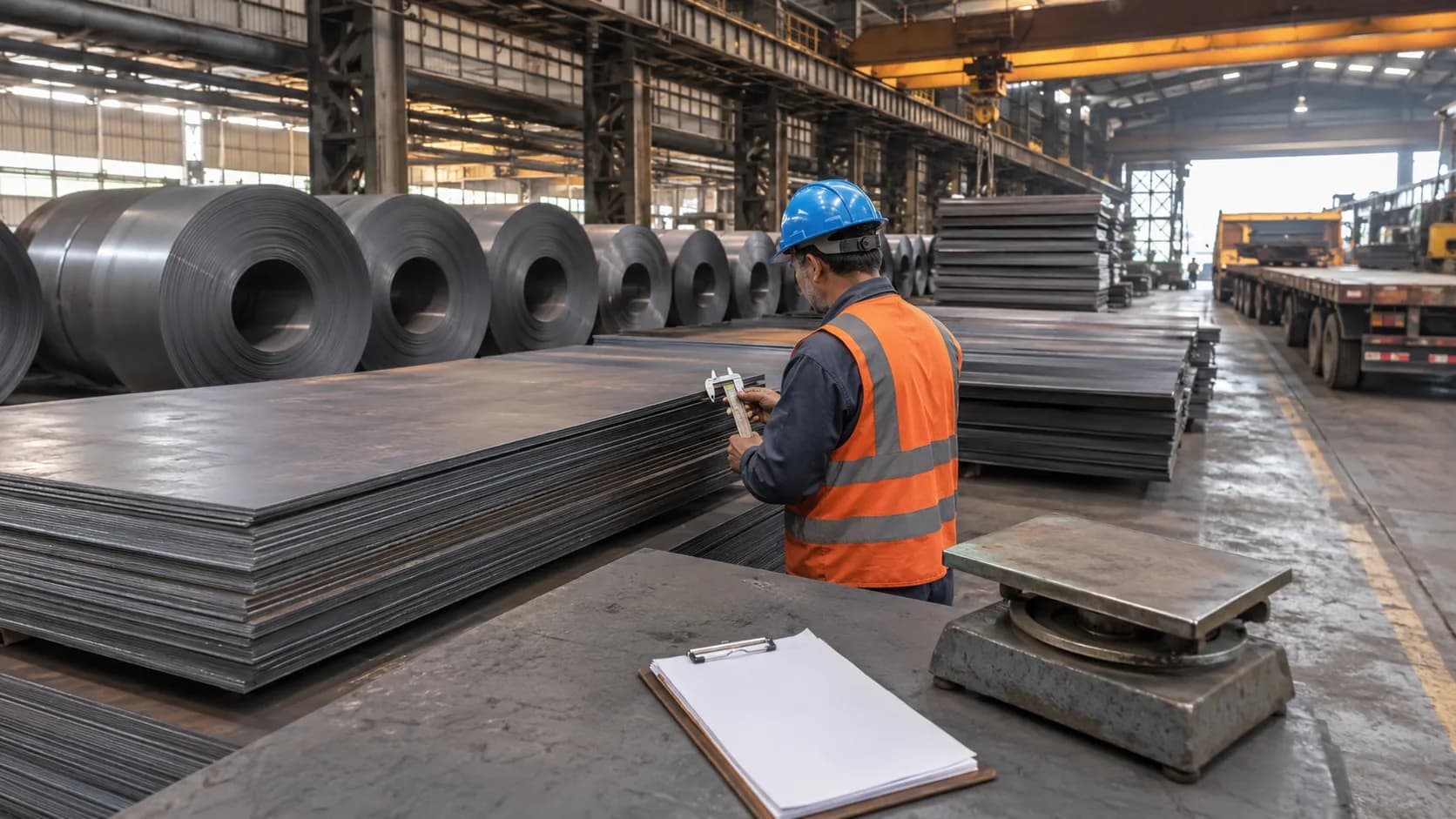
Short answer: The price of steel sheet does not depend only on the dollar. The price of raw materials, supply and demand on the Commodity Exchange, sheet type, thickness and dimensions, mill, inventory, and transportation costs also play a role in the final amount. Therefore, to compare two prices, the specifications and delivery conditions of both must be the same.
What Factors Change the Price of Sheet?
| Factor | Effect on price |
|---|---|
| Dollar and global steel prices | Affect export value, imports, raw materials, and the replacement cost of inventory. |
| Slab and production costs | Change the price of raw materials, energy, labor, and production constraints. |
| Commodity Exchange | Supply, demand, quotas, and competition can move the final price away from the base price. |
| Sheet type | The production process and application of hot-rolled, cold-rolled, galvanized, and painted sheets are not the same. |
| Thickness and dimensions | Change weight, steel consumption, cutting waste, and transportation costs. |
| Brand and grade | Standards, surface quality, mechanical properties, and technical documents differ. |
| Transportation and delivery location | Freight, loading, unloading, and the distance to the mill are added to the price. |
Classification of Steel Sheets
Specify the sheet type before asking for a price. “Steel sheet” is a general term, and each group has its own market and application:
- Hot-rolled or black sheet: For structures, tanks, chassis, and thick components.
- Cold-rolled sheet: Smoother and more precise; widely used in automobiles, household appliances, and formable components.
- Pickled sheet: Descaled hot-rolled sheet for certain forming and coating processes.
- Galvanized sheet: Has a zinc coating for better resistance to corrosion.
- Painted sheet: Coated sheet for roofs, facades, and light applications.
- Checker plate: Has a raised surface for flooring and platforms.
- Alloy, pressure-vessel, and wear-resistant sheet: For specific temperature, pressure, corrosion, or wear conditions.
These products cannot be compared solely by thickness and weight. The grade, surface quality, coating type, and standard must also be the same.
What Effect Does the Dollar Have on Sheet Prices?
An increase in the dollar usually raises import costs and the replacement value of steel, but all sheets do not become more expensive at the same time or to the same extent. Imported sheet, a product in limited supply, or a product whose inventory has been purchased recently may react more quickly. Therefore, price analysis should consider the dollar alongside supply, inventory, and product type—not on its own.
Example: Mobarakeh Hot-Rolled Sheet on the Commodity Exchange
To make the Commodity Exchange mechanism tangible, let us look at a dated offering. According to the published report on the offering of Mobarakeh Steel hot-rolled sheet on ۴ خرداد ۱۴۰۵, the offered quantity was ۲۰٬۰۲۰ tons, demand was ۱۷۱٬۷۱۰ tons, and the base price was announced as ۸۵۰٬۰۰۰ rials per kilogram. Since the discovered price was reported as equal to the base price, competition did not increase the price above the base in this example.
Comparison of hot-rolled sheet supply and demand on the Commodity Exchange (tons)
| Amount | |
|---|---|
| Supply | 20020 |
| Demand | 171710 |
Source: Mobarakeh Steel hot-rolled sheet offering report, ۱۴۰۵/۰۳/۰۴
| Indicator | Amount |
|---|---|
| Product | Mobarakeh Steel hot-rolled sheet |
| Offering date | ۱۴۰۵/۰۳/۰۴ |
| Supply | ۲۰٬۰۲۰ tons |
| Demand | ۱۷۱٬۷۱۰ tons |
| Base price | ۸۵۰٬۰۰۰ rials per kilogram |
| Reported discovered price | ۸۵۰٬۰۰۰ rials per kilogram |
The correct takeaway from this example is not that sheet prices always remain constant. We only see that in one specific offering, demand was about ۸٫۶ times the offered volume, but the reported price did not rise above the base. To analyze other offerings, the result of that offering, settlement method, product, volume, and date must be examined separately.
Source: Mobarakeh Steel hot-rolled sheet offering report on ۴ خرداد ۱۴۰۵. This is historical data and should not be used as the current price.
How Does the Commodity Exchange Form Prices?
On the Commodity Exchange, the base price and offering conditions are announced, and the final price is formed through competition among buyers. When demand exceeds supply, the transaction price can rise above the base. Formulas and regulations may also change; therefore, every figure or coefficient must be checked against the date and text of the notification for that product.
To view official offering and transaction information, visit the Iran Mercantile Exchange. News reports are useful for analyzing trends, but they do not replace official offering data.
Why Do Hot-Rolled and Cold-Rolled Sheets Have Different Prices?
| Hot-rolled sheet | Cold-rolled sheet |
|---|---|
| Produced through hot rolling; suitable for structures and thick components | More rolling and control; suitable for smooth surfaces and precise dimensions |
| Price affected by slab, thickness, and supply | Price affected by the base hot-rolled sheet, additional processing, and surface quality |
Cold-rolled sheet usually has a different price because of its finishing process and need for greater surface quality and precision, but the comparison must be made using the same grade, dimensions, mill, and delivery location.
How Do You Calculate the Total Cost?
Total cost = sheet price + taxes and services + transportation to the delivery location
Compare the price per kilogram, sheet, or coil using the same unit. Do not confuse the ex-mill price with the price delivered to the project. For an accurate quotation, specify the sheet type, thickness, width, length or coil weight, grade, mill, quantity, delivery location, and validity date.
To view current rates, visit the Ahan Time steel sheet price page.
Conclusion
The price of sheet is the result of a combination of currency, raw materials, the Commodity Exchange, product type, technical specifications, and delivery costs. If a pro forma invoice does not clarify these points, the price comparison is not reliable. First finalize the sheet type and specifications, then check the rate along with the date and delivery conditions.
Frequently Asked Questions
قیمت ورق فولادی چگونه تعیین میشود؟
قیمت ورق از ترکیب نرخ ارز، قیمت جهانی و مواد اولیه، عرضه و تقاضا، مشخصات فنی، برند و هزینه تحویل تشکیل میشود. قیمت لحظهای بدون تاریخ و شرایط معامله قابل مقایسه نیست.
دلار چه اثری بر قیمت ورق دارد؟
دلار بر ارزش صادراتی، هزینه واردات، مواد اولیه و هزینه جایگزینی موجودی اثر میگذارد؛ اما واکنش همه ورقها به یک اندازه و در یک زمان اتفاق نمیافتد.
چرا قیمت ورق گرم و سرد متفاوت است؟
ورق سرد فرآیند نورد و کنترل سطح و ابعاد بیشتری دارد و معمولاً برای کاربردهای دقیقتر مصرف میشود؛ مقایسه باید با گرید، ابعاد، کارخانه و محل تحویل یکسان انجام شود.
بورس کالا چگونه قیمت ورق را تغییر میدهد؟
قیمت پایه و قیمت پایانی در بورس تحت تأثیر عرضه، تقاضا، سهمیه، رقابت و دستورالعمل همان محصول است. مقررات و فرمولها ممکن است تغییر کنند و باید با تاریخ بررسی شوند.
برای استعلام قیمت ورق چه اطلاعاتی لازم است؟
نوع ورق، ضخامت، عرض، طول یا وزن رول، گرید، کارخانه، مقدار، محل تحویل، واحد قیمت، مالیات، حمل و تاریخ اعتبار استعلام را مشخص کنید.
Reader comments
Be the first to share your experience with this article.