
Delivery of profile and box sections has a few points of its own: checking thickness with calipers, testing the galvanized coating texture, and inspecting the condition of welded corners. Here's a step-by-step checklist.
You receive a shipment of ۴۰ by ۴۰ box sections, and the number of lengths is also correct. A few weeks later, the customer returns and says that several lengths from this shipment have bent under a normal load. When you investigate, you realize that the thickness of those lengths was below the standard—something that would never have been detected by simply counting the quantity at the time of delivery.
Why the Box-Section Checklist Is Multidimensional
For hollow sections and box sections, three things must be inspected simultaneously: wall thickness (which directly affects weight and strength), the condition of welded corners (which are the structural weak point of a box section), and, for galvanized types, the surface texture, which indicates the quality of the coating.
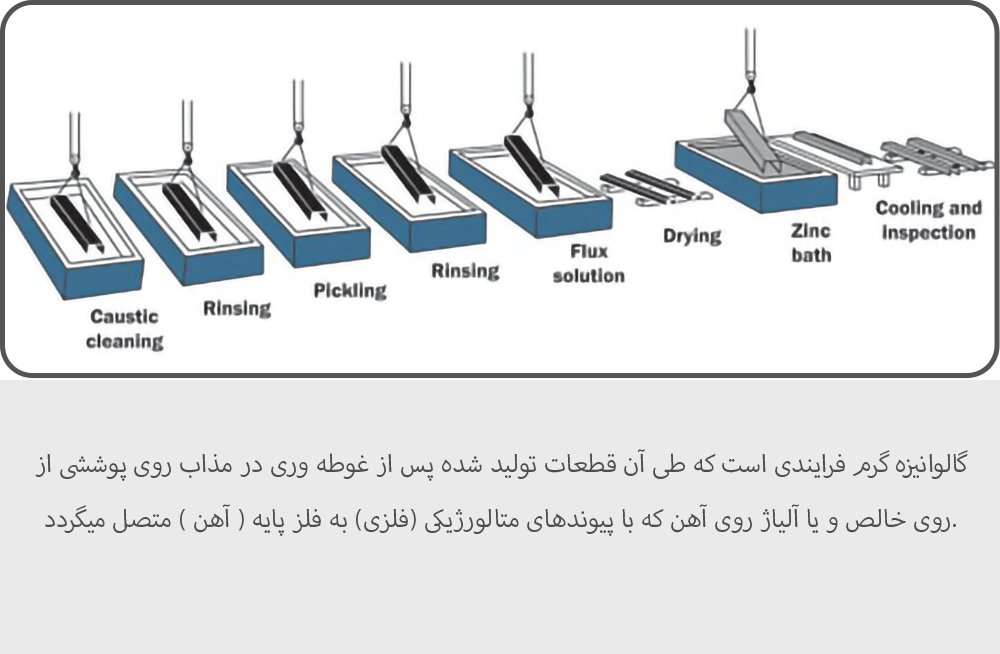
For galvanized hollow sections, the product is the result of this hot-dip immersion process, and its surface texture must be checked at the time of delivery.
Step-by-Step Checklist
- Before unloading: Check the invoice and waybill against the size, thickness, type (black/galvanized), and number of lengths.
- Thickness check: Use calipers to measure the thickness at several points and on several different lengths in the shipment.
- Welded-corner inspection: Visually check the uniformity of the weld along the corners and look for cracks or irregularities.
- Galvanized-surface test: Check for a matte, crystalline texture; an overly shiny appearance is questionable.
- Total-weight control: Calculate the theoretical weight of the shipment using the box-section weight formula and compare it with the weighbridge weight.
- In case of a discrepancy: Take photos before settlement and contact the seller.
Visible Signs That Can Be Checked at the Delivery Site
| Sign | What It Indicates | Appropriate Action |
|---|---|---|
| Twisting or buckling of a length | Improper transportation or pressure during storage | Set aside the damaged length when calculating structural strength |
| Dent on the surface | Impact during handling | Check the depth of the dent; in structural applications, even a small dent cannot be overlooked |
| Premature rust on a black box section | Prolonged storage in a damp warehouse without oiling | Check the depth of the rust and, if necessary, request a discount or replacement |
| Irregularity along the welded corners | Irregular welding during production | Give priority to lengths with uniform corners for structural use |
A Point That Is Often Forgotten When Receiving Hollow Sections
Many people check only the number and size of the lengths and overlook the thickness and quality of the welded corners. However, these two points determine both the actual weight and the structural strength of the box section; that is why they should always be among the first checks.
Frequently Asked Questions
مهمترین چک هنگام تحویل قوطی و پروفیل چیست؟
اندازهگیری ضخامت با کولیس در چند نقطه از چند شاخهٔ مختلف بار؛ چون کمضخامتی رایجترین و پنهانترین تقلب در این محصول است.
برای پروفیل گالوانیزه چه چک اضافهای لازم است؟
بررسی بافت سطح؛ گالوانیزه گرم واقعی مات و کریستالی (پوست پرتقالی) است. ظاهر بیشازحد براق و آینهای میتواند نشانهٔ گالوانیزه سرد ضعیف باشد.
چرا باید گوشههای جوشخوردهٔ قوطی را چک کرد؟
چون قوطی از جوشکاری ورق در طول گوشهها ساخته میشود. جوش نامنظم یا ضعیف در گوشهها میتواند استحکام سازهای قوطی را در نقطهٔ حساس کاهش دهد.
Reader comments
Be the first to share your experience with this article.