
Identify the most-consumed angle size by dimensions, thickness, sales turnover, and ABC analysis; along with reorder point, minimum stock, and a purchasing checklist.
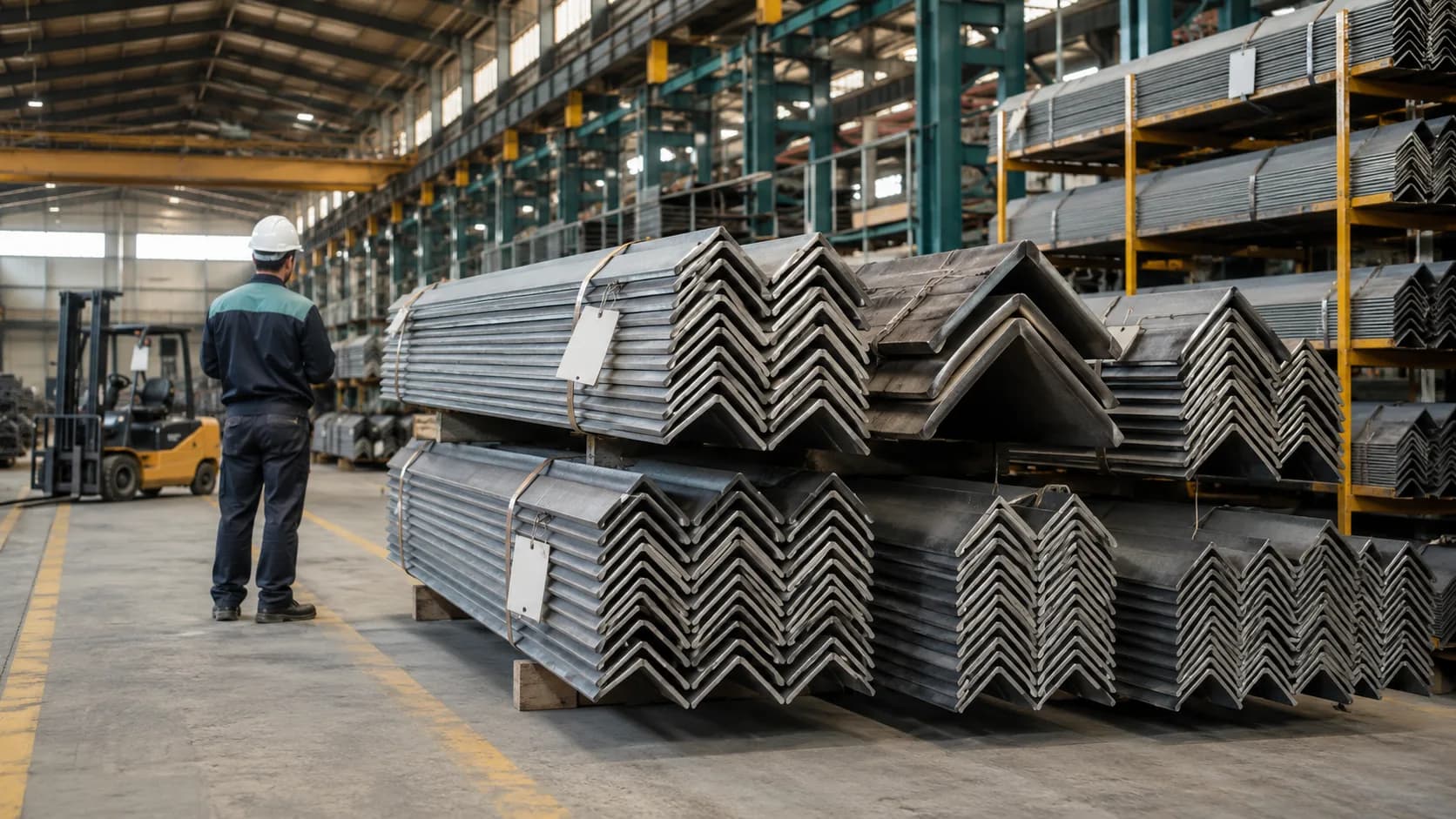
Short answer: Without sales data from a city or warehouse, it is not possible to definitively identify one angle size as the “most-consumed” in Iran. In the construction market, equal-leg angles ۴۰×۴۰, ۵۰×۵۰, and ۶۰×۶۰ میلیمتر are usually seen in a wide range of light and general orders; however, the suitable angle size for inventory should be determined based on actual sales, thickness, leg type, grade, mill, and lead time.
Management rule: Do not record the angle size using the number alone. “Angle ۶” must be written together with leg dimensions, thickness, equal-leg or unequal-leg designation, stock length, grade, and mill; because two products with the same market name may have different weights, applications, and prices.
Which angle size is the most-consumed?
If consumption means the frequency of general building and light-structure orders, ۴۰×۴۰, ۵۰×۵۰, and ۶۰×۶۰ are frequently ordered options in the market. This is a “general market pattern,” not definitive nationwide sales data. For angle-size inventory decisions, your own ۳ to ۶ months of sales reports are more valuable than any general source.
| Common nominal size | Dimensional meaning | Typical applications | Recommended inventory status |
|---|---|---|---|
| Angle ۴ | ۴۰×۴۰ میلیمتر; thickness must be specified separately. | Light connections, frames, chassis, and general work | Base inventory, subject to warehouse sales |
| Angle ۵ | ۵۰×۵۰ میلیمتر; thickness and length are independent. | Light structures, trusses, frames, and connections | Base inventory in a construction-materials warehouse |
| Angle ۶ | ۶۰×۶۰ میلیمتر; thickness determines weight and capacity. | Heavier connections and general structures | An important option for many warehouses; not necessarily the highest-selling |
| Angle ۸ and ۱۰ | ۸۰×۸۰ and ۱۰۰×۱۰۰ میلیمتر | Heavier structures and project-based orders | Limited or order-based inventory |
| Special sizes | Unequal legs, special thickness, or special length | Engineering projects and specified orders | Do not stock without a confirmed order |
The important point is that ۴۰×۴۰ with a thickness of ۳ میلیمتر does not have the same weight and application as the same size with a thickness of ۵ میلیمتر. Therefore, consumption ranking should be performed at the level of “size + thickness + leg type + grade.”
Why can’t one size be considered the best for all warehouses?
Geographical location, customers, project type, accessible mills, working capital, and warehouse space change the demand pattern. A seller located near shed-construction projects may sell larger angles, while a warehouse near urban construction sites may receive more orders for sizes ۴ and ۵.
Even the term “most-consumed” can have two meanings: the highest number of orders or the highest sales weight and value. These two indicators are not necessarily the same. For professional management, measure both separately.
Scientific method for determining the most-consumed warehouse sizes
۱. Standardize sales data
For each line, record the product code, size, thickness, leg type, grade, mill, number of pieces, sold weight, sales value, and dispatch date. Do not combine sales of Angle ۵ with different thicknesses into one line.
۲. Calculate the turnover indicators
Calculate the number of orders, sales quantity, and inventory-holding days for a ۹۰- or ۱۸۰-day period. If a size is repeated in many orders but has a low profit margin, it should not be allocated the most capital merely because of its order count.
۳. Conduct ABC analysis
A-group items usually account for a larger share of annual consumption value and require closer control and review. B-group items have medium importance, while C-group items are low-value or slow-moving. Percentage thresholds should be determined using your warehouse data; the following table is only a starting point.
| Group | Suggested criterion | Inventory policy |
|---|---|---|
| A | High consumption value or profit margin | Weekly review, precise minimum stock, and rapid supply |
| B | Medium turnover and value | Biweekly review and periodic ordering |
| C | Low sales or project-based orders | Limited inventory and purchase after receiving an order |
How are minimum stock and the reorder point for angles determined?
For each product code, determine minimum stock using this logic: average daily consumption × lead time + safety stock. The reorder point is when available inventory reaches a level such that, if you place an order today, you will not face a shortage before the shipment arrives.
Example: If average sales of Angle ۵ are ۸ pieces per day, lead time is ۷ days, and safety stock is ۲۰ pieces, the approximate reorder point is ۷۶ pieces. This example is not a definitive decision; the sales season, supply fluctuations, capital, and the mill’s minimum order quantity must be considered.
Common mistakes in angle inventory management
- Recording the product under the vague title “Angle ۶” without thickness and leg type
- Equating the number of orders with consumption value
- Purchasing large volumes of special sizes solely because of a discount
- Ignoring stock length, weight, grade, and the mill’s certificate
- Not having an available-inventory report that accounts for scrap, reservations, and shipments in transit
- Comparing the price per kilogram without calculating freight, tax, and capital-holding costs
Order and warehouse-receipt inspection checklist
- Write the leg dimensions and thickness on the pro forma invoice.
- Specify whether the angle has equal or unequal legs and state the stock length.
- Check the grade, standard, mill, and product certificate.
- Record the number of pieces, weighbridge weight, and reservation status separately.
- Compare the price with the date, unit, delivery location, and freight.
- For slow-moving sizes, have a customer order or consumption plan before purchasing.
To check daily prices and availability, visit the angle price page. To control the theoretical weight of the shipment, you can use the steel product weight calculation tool.
Main question: Which angle size should I keep in my warehouse?
Take the answer from your own sales report, not from a general list. First, sort three to six months of sales by size, thickness, and value; then define minimum stock, reorder point, and an alternative supplier for the A group. In the absence of sufficient data, keep initial inventory limited and revise the warehouse mix after several sales cycles.
Summary
۴۰×۴۰, ۵۰×۵۰, and ۶۰×۶۰ میلیمتر are generally seen in common market orders, but none is the “best” without considering thickness, leg type, grade, and your warehouse sales data. Professional angle management means precise product coding, turnover analysis, ABC, reorder points, and weight and document control—not simply purchasing a large volume of a popular size.
Sources and preparation method
- Internal sales data and product-turnover reports, where available, should be the primary basis for inventory decisions.
- AhanTime daily angle price page for viewing prices and obtaining up-to-date quotations.
- Weight calculation tool for checking the theoretical shipment estimate.
Frequently Asked Questions
پرمصرفترین سایزهای نبشی کداماند؟
در بازار عمومی، نبشیهای ۴۰×۴۰، ۵۰×۵۰ و ۶۰×۶۰ در سفارشهای متنوع دیده میشوند؛ اما رتبه واقعی باید با گزارش فروش همان شهر و انبار سنجیده شود.
چرا نبشی ۶ اینقدر پرمصرف است؟
مصرف نبشی ۶۰×۶۰ به پروژه، ضخامت، گرید و منطقه فروش بستگی دارد. تعادل وزن، ظرفیت و قیمت را نمیتوان بدون مشخصات فنی و داده فروش قطعی دانست.
چه سایزهایی را نباید انبار بزرگ کرد؟
سایزهای بزرگ یا خاص را فقط بر اساس سفارش، گردش واقعی و زمان تأمین انبار کنید؛ کمگردشبودن باید از داده فروش شما مشخص شود، نه یک فرض عمومی.
آیا سایز نبشی بهتنهایی برای خرید کافی است؟
خیر. ابعاد بال، ضخامت، مساوی یا نامساویبودن بال، گرید، طول شاخه، کارخانه و مدارک محصول باید کنار سایز ثبت شوند.
Reader comments
Be the first to share your experience with this article.