A piece of paper called a certificate is sometimes more important than the rebar coupler itself. This is because the certificate is what proves that the connection actually reaches the required strength. But not every piece of paper is a valid certificate; you must know what a proper certificate should show.
Standard Basis: Chapter Nine
In Iran, the basis for accepting mechanical rebar connections is Chapter Nine of the National Building Regulations. According to this chapter, a type ۱ coupler must withstand at least ۱.۲۵ times the rebar yield stress. A valid certificate must show that the coupler reached this criterion in an actual tensile test, rather than merely claiming it.
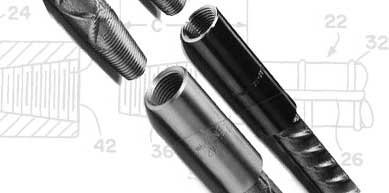
A valid certificate must show the actual tensile test result and achievement of at least ۱.۲۵ times the yield stress.
Contents of a Proper Certificate
- The numerical tensile test result and comparison with at least ۱.۲۵ times the rebar yield stress.
- Exact coupler specifications: size, type (threaded, pressed...) and diameter of the tested rebar.
- The reference or laboratory that conducted the test and its date.
- Matching the rebar type (for example, Rib ۵۰۰) with the rebar's own certificate.
Coupler Type ۱ and Type ۲
Chapter Nine categorizes mechanical connections, and a type ۱ coupler that meets the criterion of at least ۱.۲۵ times the yield stress is accepted for many structural applications. For more critical areas of a structure that require stricter seismic performance, higher requirements may also apply. The table below presents the difference simply.
| Subject | Standard-compliant coupler | Uncertified coupler |
|---|
| Connection strength | At least ۱.۲۵ times the rebar yield stress | Unknown and unproven |
| Seismic performance | Confirmed by testing | Risk of failure during an earthquake |
| Acceptance during inspection | Acceptable to the supervising engineer | Rejected |
| Legal liability | Covered by technical documentation | Falls on the consumer and seller |
Consequences of an Uncertified Connection
Using an uncertified coupler in a structural project involves three risks: first, the real risk of connection failure under seismic loading; second, rejection of the work during technical inspection and by the supervising engineer; and third, legal liability if a problem occurs. None of these is worth the savings from the price of an uncertified coupler.
For a seller, requesting and providing a proper certificate protects both the customer and the seller's own reputation; this is a professional practice that leaves no room for bargaining in structural work.

Reader comments
0 comments
No comments yet
Be the first to share your experience with this article.