
Rebar is one of the most important steel sections for reinforcing concrete. Learn about its types, grades A2 through A4, production method, standards, and tips for buying and storing rebar.
What Is Rebar?
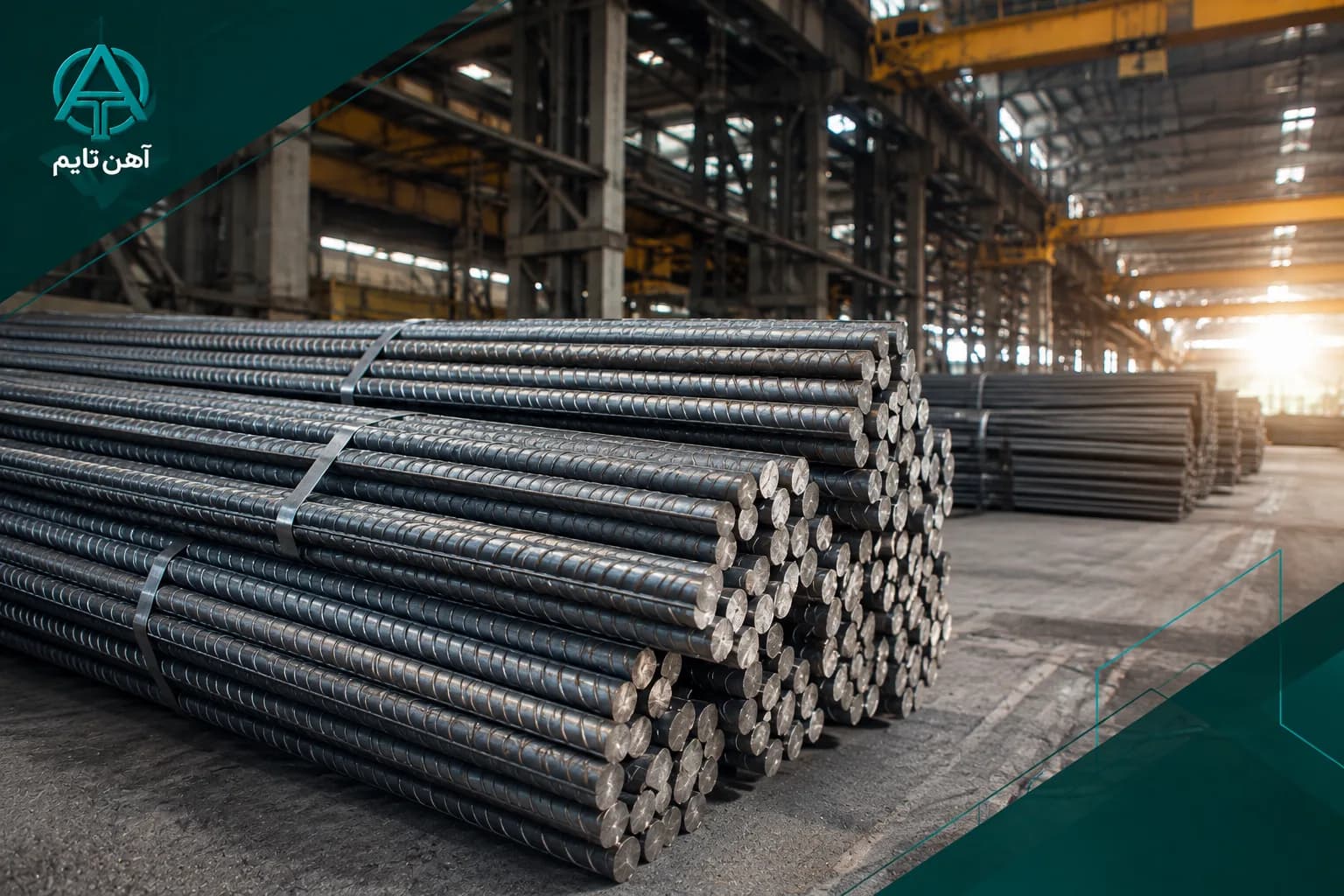
Rebar is one of the most important steel sections used to reinforce concrete in buildings and civil-engineering structures. Concrete performs well under compression, but its resistance to tension is more limited; therefore, rebar is placed alongside concrete to improve the structure’s performance against tensile forces and other design loads.
Rebars differ in terms of surface shape, grade, diameter, mechanical properties, and production method. In the Iranian market, plain and ribbed rebar are the main types, while grades A2, A3, and A4 are also common in technical specifications and the market. Rebar must be selected based on the structural drawings, standard, and technical specifications of the project.
In this guide, we examine rebar types, the differences between A2, A3, and A4 grades, production methods, standards, manufacturing plants, and important points for purchasing and quality control of rebar.
Rebar Types
Rebars are divided into different categories based on rib type, grade, production method, diameter, and application. Each type of rebar has specific mechanical properties and applications, and selecting the right type can play an important role in the strength, safety, and durability of the structure.
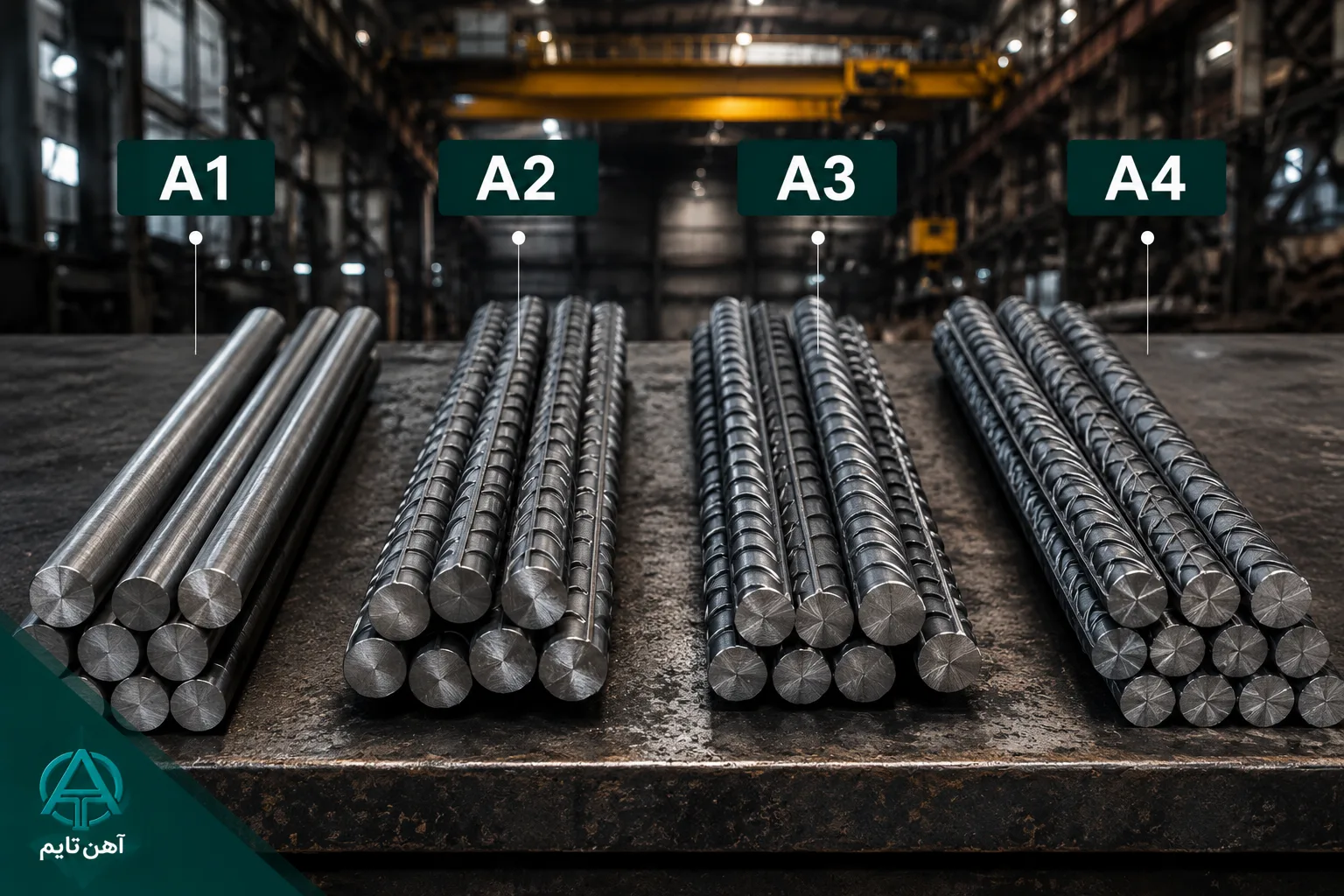
In terms of appearance, rebars are divided into two main groups: plain and ribbed. Ribbed rebars are also produced in grades A1, A2, A3, and A4, which differ in strength, ductility, and application. Below, we examine the types of rebar and the characteristics of each so that you can make a more suitable choice for construction and civil-engineering projects.
Rebar Types Based on Appearance
Plain Rebar
Plain rebar has a smooth surface without ribs. Because it lacks ribs, its mechanical interlock with concrete differs from that of ribbed rebar, and its application must be determined according to the project design. Due to its suitable ductility, this type of rebar is used in some industrial applications, metal components, and specified reinforcement components.
Ribbed Rebar
Ribbed rebar has protrusions on its surface that help improve the mechanical interlock between steel and concrete. For this reason, it is widely used in reinforced-concrete structures. The rib type, grade, diameter, and mechanical properties must comply with the project’s technical specifications.
Rebar Types Based on Grade
One of the most important methods of classifying rebar is classification based on grade and mechanical properties. In the Iranian market, grades A1, A2, A3, and A4 are well known and differ in strength, ductility, and application.
A1 Rebar
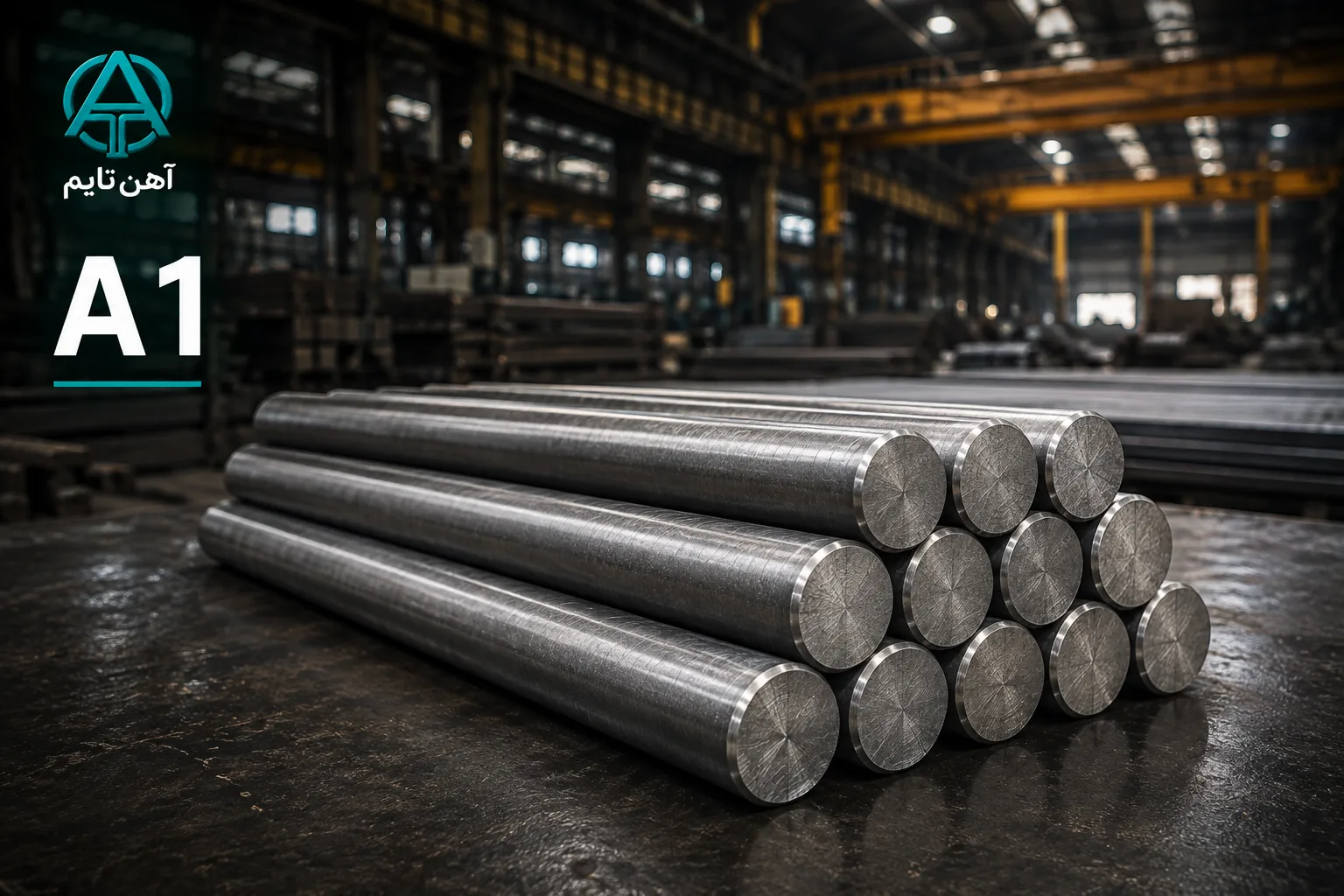
A1 refers to plain, non-ribbed rebar and has greater ductility than ribbed grades. Its application must be determined according to the project’s technical specifications.
A2 Rebar
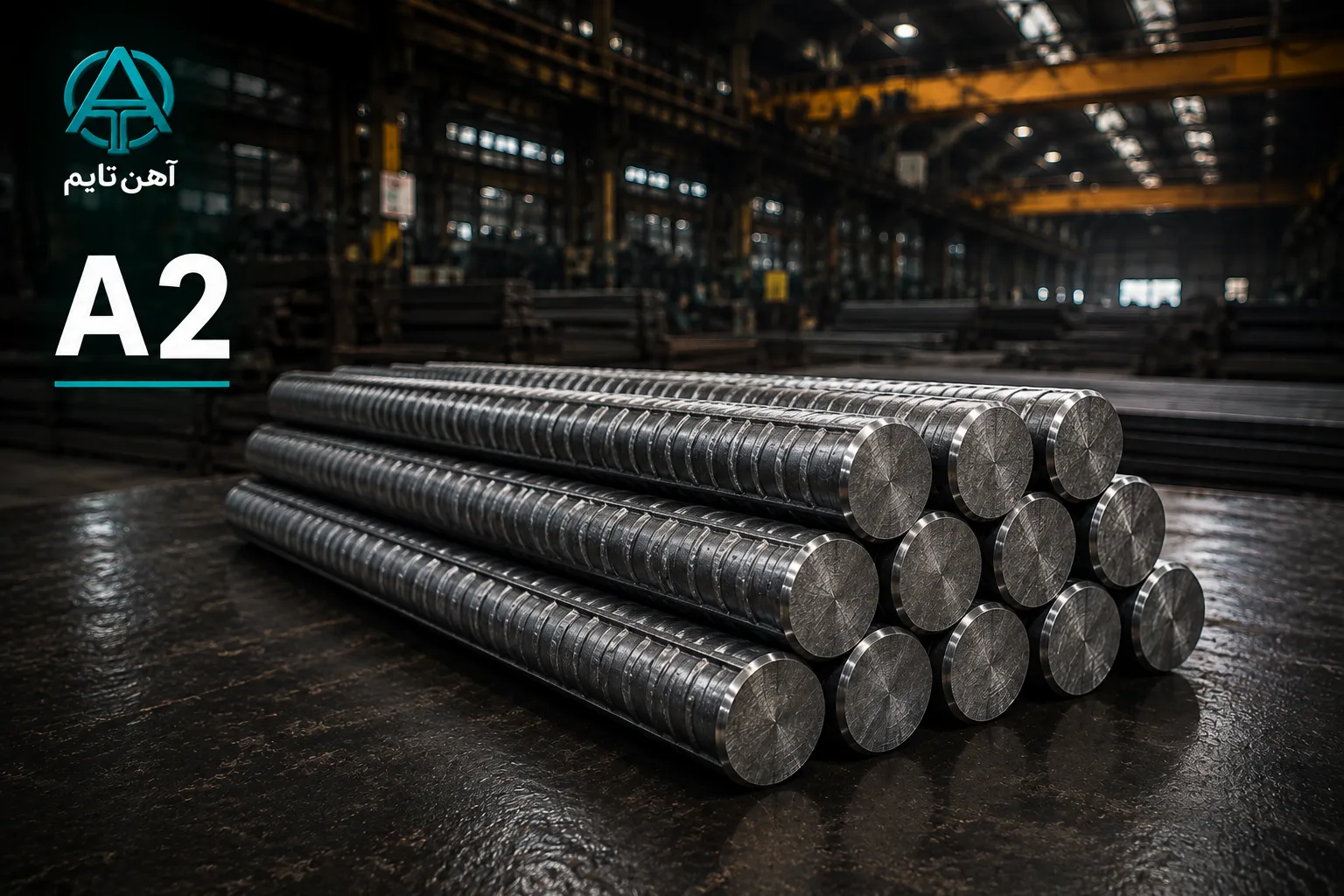
A2 rebar is generally known for applications where ductility and bending are important, and it is used in some stirrups, hoops, hairpin bars, chairs, and bendable components.
A3 Rebar
A3 rebar is one of the most widely used grades in the Iranian market. In projects where the structural drawings specify its use, it is used for the main reinforcement of components such as foundations, beams, and columns. Bending, welding, or replacing it with another grade must be carried out in accordance with the project’s technical requirements.
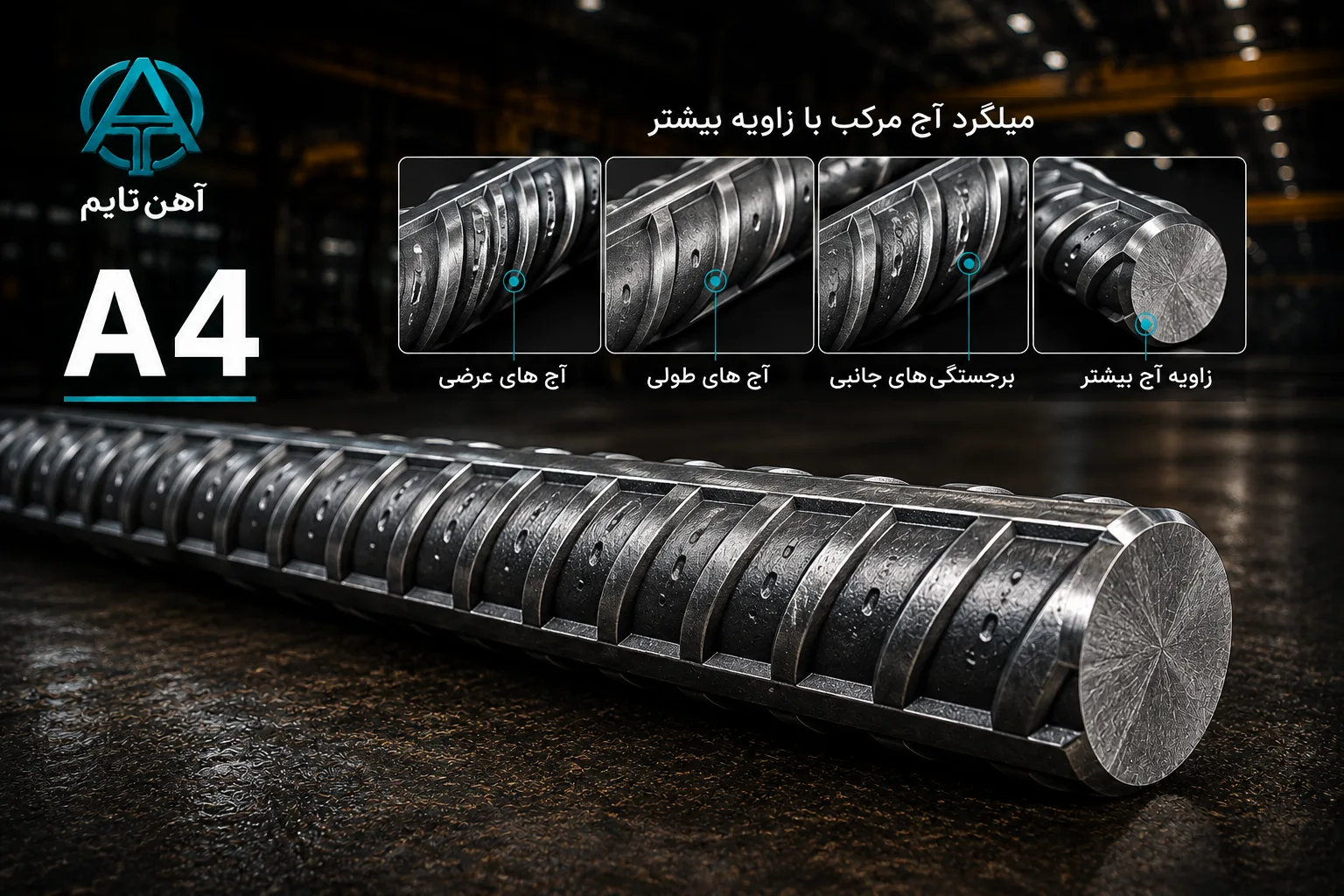
A4 Rebar
A4 is known as a grade with higher strength and can be used in designs where the use of higher-strength steel is permitted. Using A4 does not mean it is the best option for every project; its selection must be based on structural calculations, the required ductility, and the project standard.
Rebar Grade Comparison Table
| Feature | A1 | A2 | A3 | A4 |
|---|---|---|---|---|
| Rebar type | Plain | Ribbed | Ribbed | Ribbed |
| Rib type | No ribs | Spiral | Herringbone (seven and eight) | Composite |
| Relative strength | Low | Medium | High | Very high |
| Ductility | Very high | High | Medium | Low |
| Bending capacity | Very suitable | Suitable | Limited | Limited and subject to requirements |
| Main application | Industrial components, bending | Stirrups, hoops, joists | Columns, beams, foundations | Towers, bridges, dams, and heavy structures |
| Bond with concrete | Low | Good | Very good | Very good |
| Suitable as main structural rebar | ✖ | In some cases | ✔ | ✔ |
| Relative price | Low | Medium | High | Highest |
---
Rebar Types Based on Production Method
Hot Rolling
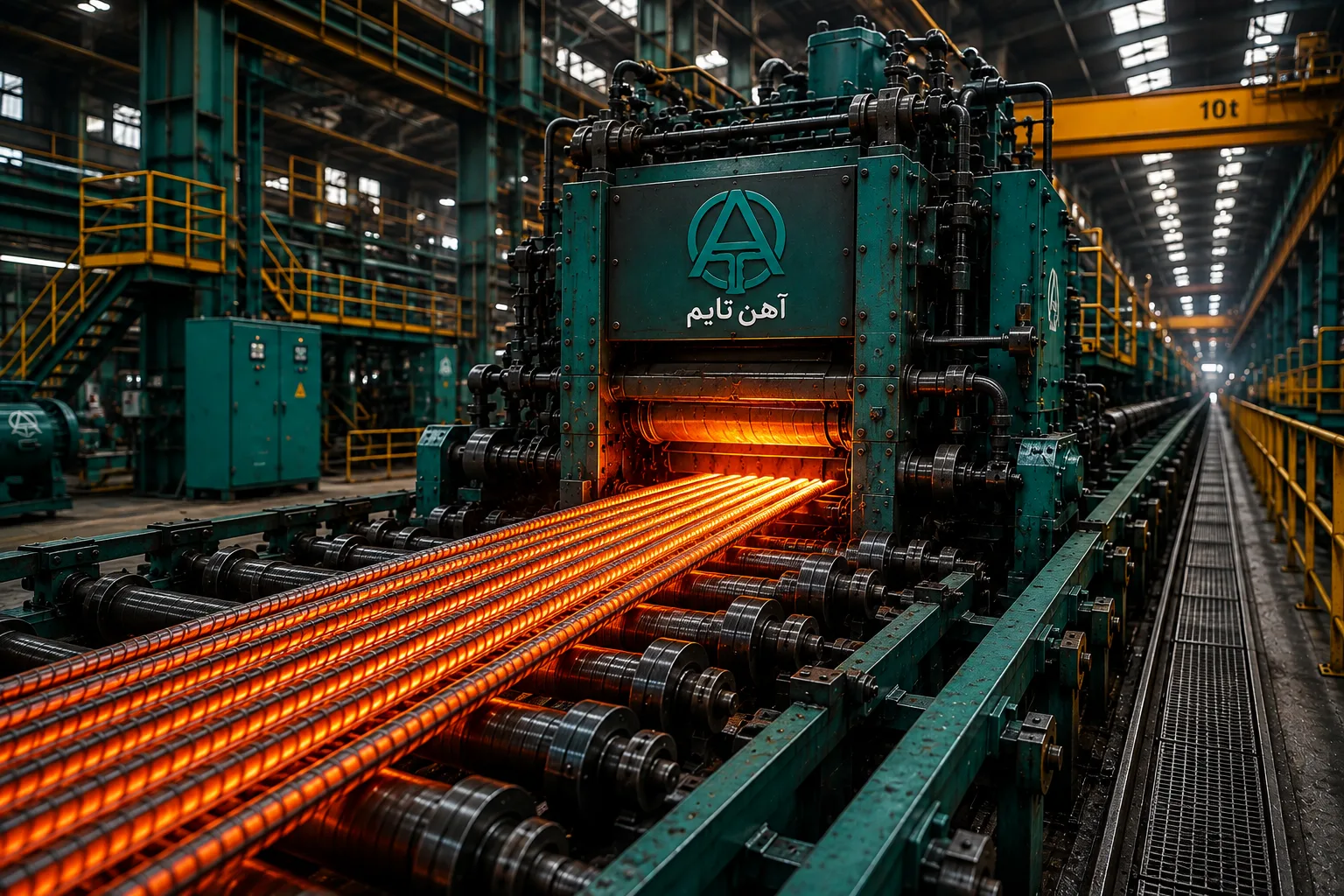
In hot rolling, steel is formed at high temperature and passed between rollers until it reaches the required dimensions. This process is one of the main methods for producing construction rebar.
Thermex (Thermex)
In the Thermex process, after hot rolling, the rebar is cooled in a controlled manner. The aim is to achieve a suitable combination of strength and ductility. The final quality of the product does not depend solely on being labeled “Thermex”; the steel composition and precise process conditions are also important.
Microalloyed
In microalloyed steels, controlled amounts of alloying elements are used to affect the microstructure and mechanical properties. The aim may be to increase strength while maintaining an appropriate level of ductility.
Alloyed
In alloy steels, alloying elements are added to the steel composition to create specific properties. The type and amount of elements, production process, and heat treatment can affect the final properties.
Cold Rolling
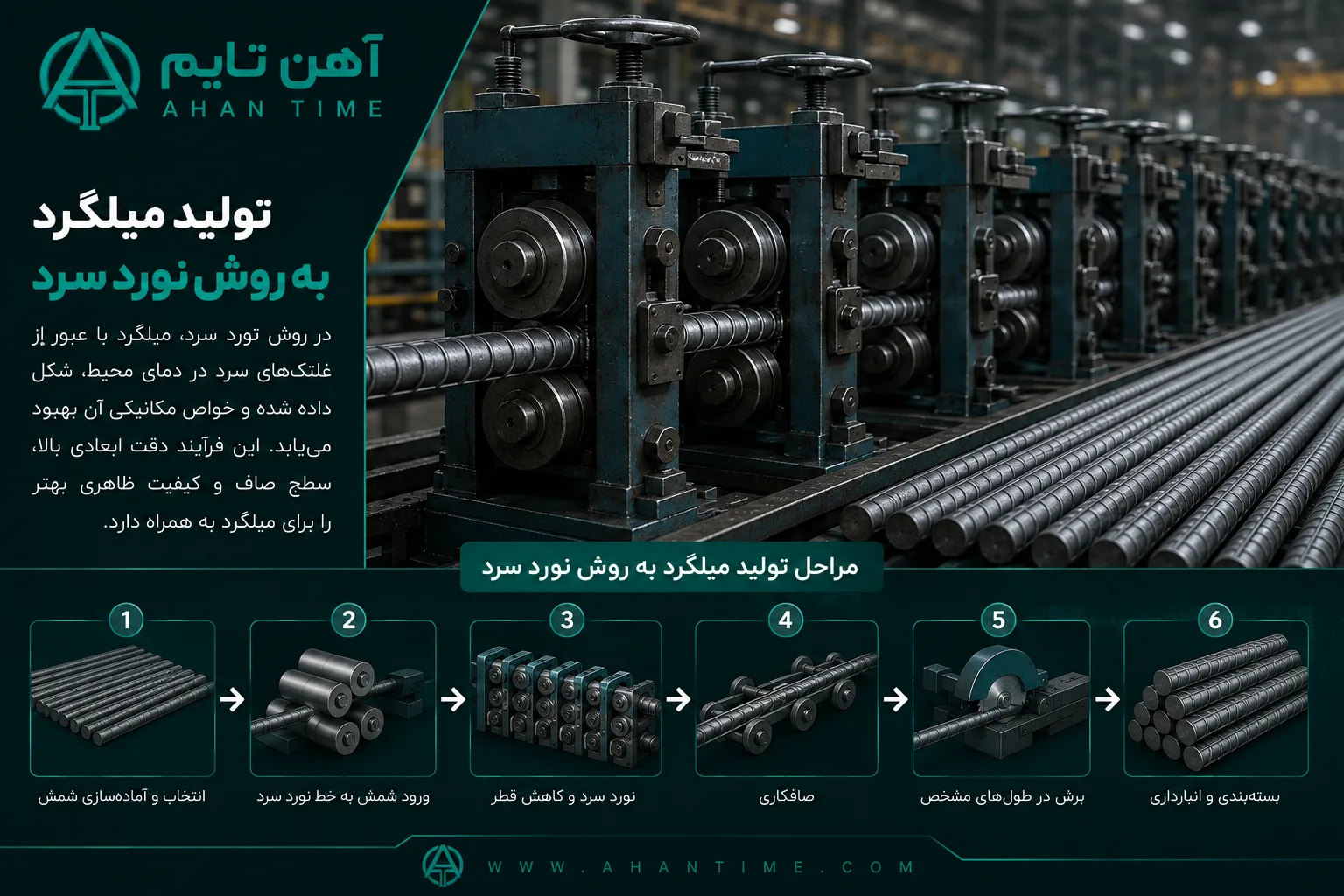
In cold rolling, deformation takes place at a temperature below the recrystallization temperature. This process can increase dimensional accuracy, and through work hardening, it can affect strength and ductility.
Rebar Production Methods Table
| Production method | Process summary | Key feature | Main advantage | Application |
|---|---|---|---|---|
| Hot rolling | Forming billets at high temperature | Basic rebar production method | Economical and large-scale production | General construction |
| Cold rolling | Deformation at low temperature | Smooth surface and high accuracy | Better surface quality | Precise and specialized components |
| Thermex | Hot rolling + rapid cooling | Hard surface + soft core | High strength at a reasonable price | Common construction projects |
| Microalloyed | Adding microalloying elements | Uniform and resistant properties | Excellent performance in earthquakes | Important and sensitive structures |
| Alloyed | Adding specific alloying elements | Customized properties | Very high strength | Specialized industrial projects |
The Largest and Most Well-Known Rebar Manufacturing Plants in Iran
| No. | Plant | Province | Nominal rebar production capacity (tons per year) | Grades produced | Production size (millimeters) |
|---|---|---|---|---|---|
| 1 | Isfahan Steel | Isfahan | More than ۶۰۰,۰۰۰ | A1، A2، A3 | 8 to 32 |
| 2 | Khorasan Steel (Neyshabur) | Razavi Khorasan | ۵۵۰,۰۰۰ | A2، A3 | 10 to 32 |
| 3 | Kavir Kashan Steel | Isfahan | ۴۵۰,۰۰۰ | A2، A3، A4 | 8 to 40 |
| 4 | Azerbaijan Steel (Mianeh) | East Azerbaijan | ۱۶۹,۰۰۰ | A2، A3 | 10 to 32 |
| 5 | Shahin Bonab | East Azerbaijan | ۶۰۰,۰۰۰ | A2، A3، A4 | 8 to 32 |
| 6 | Zafar Bonab | East Azerbaijan | ۴۰۰,۰۰۰ | A2، A3 | 8 to 32 |
| 7 | Sarmad Abarkuh | Yazd | ۴۵۰,۰۰۰ | A2، A3 | 8 to 32 |
| 8 | Alborz Iranian Steel (FAICO) | Mazandaran | ۷۰۰,۰۰۰ | A2، A3 | 8 to 32 |
| 9 | Aryan Steel | Qazvin | ۱,۲۰۰,۰۰۰ | A2، A3 | 10 to 32 |
| 10 | Jahan Foolad Sirjan | Kerman | ۶۵۰,۰۰۰ | A2، A3 | 8 to 32 |
| 11 | Bafgh Steel Complex | Yazd | ۵۵۰,۰۰۰ | A2، A3 | 8 to 32 |
| 12 | Rohina Jonoub Steel | Khuzestan | ۵۰۰,۰۰۰ | A2، A3 | 8 to 40 |
| 13 | Anahita Gilan Steel | Gilan | ۳۲۰,۰۰۰ | A2، A3 | 8 to 32 |
| 14 | Kerman Bardsir Steel Industries | Kerman | ۴۰۰,۰۰۰ | A2، A3 | 8 to 32 |
| 15 | Persian Foolad Arya | Qazvin | ۵۰۰,۰۰۰ | A2، A3 | 8 to 32 |
| 16 | Siaden Abhar | Zanjan | ۲۸۸,۰۰۰ | A2، A3 | 8 to 32 |
| 17 | Sima Jahan Steel | Kermanshah | ۱۵۰,۰۰۰ | A2، A3 | 8 to 32 |
| 18 | Iranian Steel | Hamadan | ۱۰۰,۰۰۰ | A2، A3 | 8 to 32 |
| 19 | Saba Foolad Zagros | Chaharmahal and Bakhtiari | ۳۰۰,۰۰۰ | A3، A4 | 10 to 40 |
| 20 | Rad Hamadan | Hamadan | ۵۰۰,۰۰۰ | A2، A3 | 8 to 32 |
Date of last information review: ۲۱ Mordad ۱۴۰۵ (۱۲ August(August) ۲۰۲۶)
Rebar Standards
A standard determines the product’s technical requirements, such as mechanical properties, dimensions, chemical composition, rib specifications, and quality-control tests. When purchasing, the standard specified in the project’s technical specifications must be compared with the standard declared for the product.
Among international standards, for example, ASTM A615/A615M covers plain and deformed carbon-steel bars for reinforced concrete, while ASTM A706/A706M applies to low-alloy steel bars with more controlled requirements for mechanical properties and chemical composition.
Standards and their grades must not be considered equivalent solely based on similarities in their names; the standard edition and the project specifications must be the basis for selection.
Rebar Buying Guide
Buying rebar is not merely a matter of comparing the price per kilogram. First, determine the project’s technical specifications, and then compare products with identical specifications in terms of price and delivery conditions.
Important Points Before Purchasing
- Rebar type
- Grade
- Size
- Standard
- Manufacturing plant
- Required weight and quantity
- Current price
- Transportation conditions
- Quality-control documents
- Delivery conditions
Checking Rebar Weight
Compare the actual weight with valid technical specifications and weight tables. A heavier rebar is not, by itself, an indication of higher quality.
For an approximate calculation of the weight per meter:
Approximate weight per meter (kilograms) = diameter² ÷ 162
In this equation, the diameter is in millimeters. For purchasing, the product’s actual specifications and standard tolerances must also be checked.
Quality Inspection
Appearance, rib shape, surface uniformity, and the absence of visible defects are useful for preliminary inspection, but accurately determining mechanical and chemical properties requires technical documents and relevant tests.
Current Rebar Price
The price of rebar depends on factors such as the steel market, raw-material prices, supply and demand, and transportation costs. The price must be obtained at the time of purchase, and products with the same size, grade, plant, and delivery conditions must be compared.
Frequently Asked Questions
تفاوت میلگرد ساده و میلگرد آجدار چیست؟
میلگرد ساده (گرید A1) سطحی صاف و بدون آج دارد و چسبندگی کمی به بتن دارد، به همین دلیل بیشتر برای خاموت، قطعات صنعتی و خمکاری استفاده میشود، نه بهعنوان آرماتور اصلی. میلگرد آجدار (گریدهای A2، A3 و A4) به دلیل آجهای روی سطح، چسبندگی بسیار بالاتری با بتن دارد و نیروهای کششی و خمشی را بهتر منتقل میکند، به همین دلیل در سازههای بتنآرمه بهعنوان میلگرد اصلی به کار میرود.
کدام گرید میلگرد برای ستون و فونداسیون مناسب است؟
میلگرد A3 با تنش تسلیم حدود ۴۰۰ مگاپاسکال و مقاومت کششی حدود ۶۰۰ مگاپاسکال، پرکاربردترین گرید برای اعضای اصلی سازه از جمله فونداسیون، ستونها، تیرها، دیوارهای برشی و سقفهای بتنی است. برای سازههای سنگینتر مانند برجها، پلها و سدها که به مقاومت بالاتری نیاز دارند، معمولاً از میلگرد A4 استفاده میشود؛ انتخاب نهایی همیشه باید بر اساس نقشههای سازه و محاسبات مهندسی باشد.
فرق میلگرد A2 و A3 چیست و کدام را باید انتخاب کرد؟
میلگرد A2 با آج مارپیچی، انعطافپذیری بیشتری دارد و برای قطعاتی که نیاز به خمکاری دارند مثل خاموت، رکاب و تیرچه مناسبتر است. میلگرد A3 با آج جناقی، مقاومت مکانیکی بالاتری دارد (تنش تسلیم حدود ۴۰۰ در برابر حدود ۳۴۰ مگاپاسکال در A2) و به همین دلیل بهعنوان میلگرد اصلی در آرماتور ستونها، تیرها و فونداسیون به کار میرود. انتخاب بین این دو باید مطابق نقشههای سازه و نظر مهندس طراح انجام شود.
میلگرد A4 برای چه نوع پروژههایی استفاده میشود؟
میلگرد A4 مقاومترین گرید میلگرد آجدار است (تنش تسلیم حدود ۵۰۰ و مقاومت کششی حدود ۶۵۰ مگاپاسکال) و برای سازههای سنگین و پروژههای زیربنایی طراحی شده؛ از جمله برجهای بلندمرتبه، پلها، سدها، نیروگاهها، تونلها و پروژههای نفت، گاز و پتروشیمی. به دلیل شکلپذیری کمتر نسبت به A2 و A3، استفاده از آن معمولاً باید با تأیید مهندس محاسب انجام شود.
وزن میلگرد چطور محاسبه میشود؟
برای محاسبه تقریبی وزن هر متر میلگرد از رابطه «وزن تقریبی هر متر (کیلوگرم) = قطر به میلیمتر به توان دو، تقسیم بر ۱۶۲» استفاده میشود. برای مقایسه دقیقتر، وزن واقعی هر شاخه باید با جدول اشتال و مشخصات فنی کارخانه تطبیق داده شود، چون میلگرد بر اساس وزن خرید و فروش میشود و اختلاف وزن مستقیماً روی هزینهٔ نهایی پروژه اثر میگذارد.
روشهای تولید میلگرد چه تفاوتی با هم دارند؟
میلگرد عمدتاً به دو روش نورد گرم و نورد سرد تولید میشود. نورد گرم رایجترین روش برای میلگردهای ساختمانی است و روشهای فرعی آن مانند ترمکس، آلیاژی و میکروآلیاژی هرکدام ترکیب متفاوتی از استحکام و شکلپذیری ایجاد میکنند. نورد سرد در دمای محیط انجام میشود، دقت ابعادی و سطح صافتری ایجاد میکند اما شکلپذیری کمتری نسبت به نورد گرم دارد و بیشتر برای کاربردهای خاص به کار میرود.
Reader comments
Be the first to share your experience with this article.