The customer says, “I want fittings,” but a pipeline route is full of different components, each of which performs its own function. An elbow turns the route, a tee creates a branch, a reducer changes the diameter, and a cap closes the end. Understanding these allows you to sell exactly what the customer needs for their piping layout.
Each Fitting Has a Function in the Route
An elbow (Elbow) is used to change the direction of the route and is supplied in the two common angles of ۹۰ and ۴۵ degrees. A tee (Tee) is used to create a branch and can be equal or reducing. A reducer (Reducer) changes the pipe diameter and is available in two types: concentric and eccentric. A cap (Cap) closes the end of a pipe.
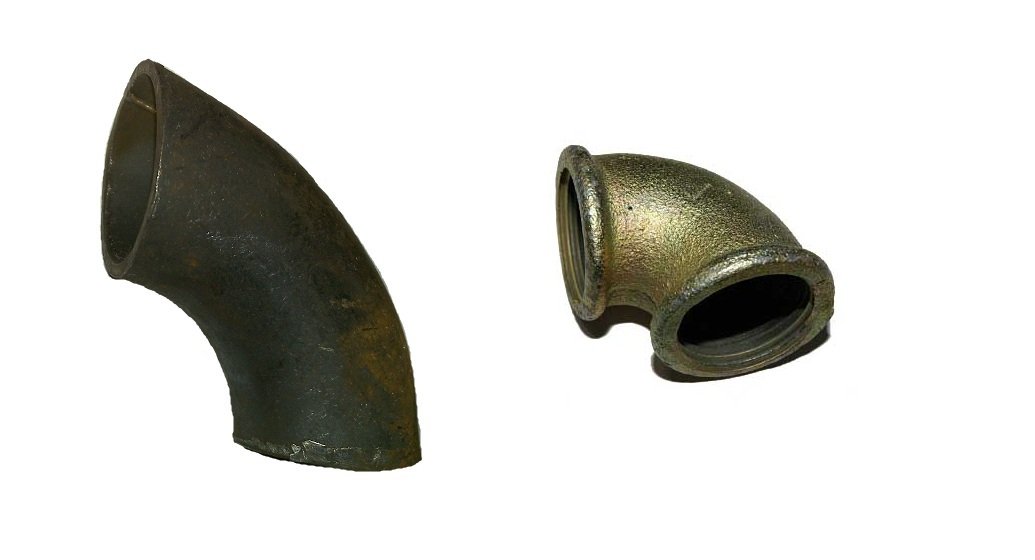
An elbow changes the direction of the pipe; each fitting has a specific function in the piping layout.
Fitting Selection Table
| Fitting | Function | Selection note |
|---|
| Elbow ۹۰/۴۵ | Changing the route direction | The angle is selected based on the route layout |
| Equal/reducing tee | Creating a branch | The branch diameter is equal to or smaller than the main diameter |
| Concentric reducer | Changing the diameter with a fixed axis | Vertical lines |
| Eccentric reducer | Changing the diameter with one flat edge | Horizontal lines; preventing air/ sediment accumulation |
| Cap | Closing the end of the pipe | End of the line or a future expansion point |
Why This Understanding Makes Sales More Precise
If a customer buys a concentric reducer for a horizontal line when an eccentric reducer is required, air or sediment may accumulate in the line. If they choose the wrong elbow angle, the route will not align. By asking for details about the route layout, you can sell exactly the right fitting and prevent rework at the installation site.
A salesperson who visualizes the pipe route in their mind gives the customer a coordinated set instead of selling scattered components.
An Additional Point About Wall Thickness
Fittings must have a wall thickness appropriate to the pipe grade and class of the line, not merely the correct nominal size. A reducer or tee with a wall thinner than that of the main pipe becomes a weak point in the route, even if it has been selected correctly in terms of size.

Reader comments
0 comments
No comments yet
Be the first to share your experience with this article.