The customer wants a flange, but a flange is not just one thing; it is a family of types, each designed for different conditions. Slip-on is for simple installation, weld neck is for high pressure, and blind is for closing a line. Choosing the right type plays a role in the performance and safety of the connection equal to that of the pressure class.
Main Types of Flanges
The slip-on flange is the most widely used type; the pipe is placed inside it and welded from both sides. It is simple and economical to install and is suitable for low to medium pressure. The weld neck flange has a long conical neck that is welded to the pipe and transfers stress gradually; it is the best choice for high pressure and critical lines. The blind flange, or blank flange, completely closes the opening. Other types include threaded, socket weld, and lap joint flanges.
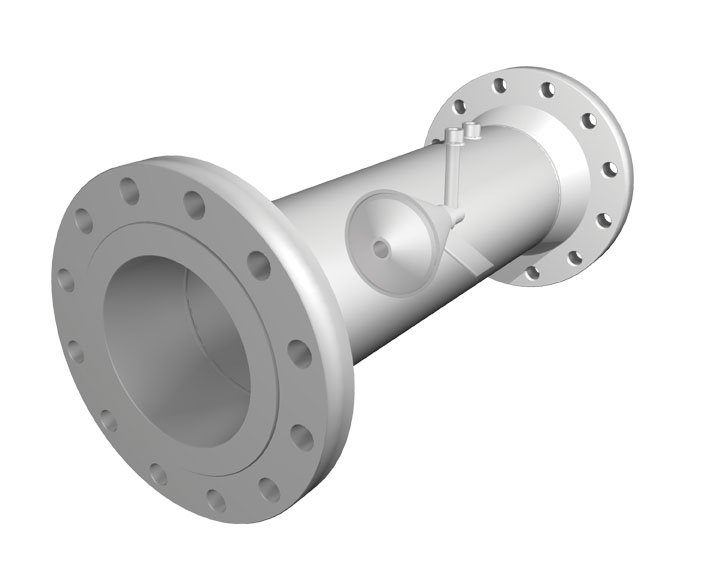
With its conical neck, the weld neck flange transfers stress gradually to the pipe and is the best choice for high pressure.
Flange Type Selection Table
| Flange Type | Feature | Suitable For |
|---|
| Slip-on | Simple installation, welding on both sides | Low to medium pressure, economical installation |
| Weld neck | Conical neck, gradual stress transfer | High pressure and critical lines |
| Blind/Blank | Complete closure of the opening | End of a line, inspection, future expansion |
| Threaded | Connection without welding | Small lines and locations where welding is not possible |
A Note About Fittings and Flanges
A practical point you should tell the customer: directly using fittings such as elbows and tees with a slip-on flange is generally not possible, because these fittings do not fit completely inside the slip-on flange. In this case, a piece of pipe must first be welded to the flange and then connected to the elbow or tee. Knowing these details transforms you from merely a seller into an installation consultant.
Choosing the right flange type, together with the correct class and material, forms the three sides of a safe and durable connection.
A Practical Warning About Blind Flanges
A blind flange is used to close a line temporarily or permanently, but it should not be confused with a simple cap; because part of the system is under pressure, it must have the same pressure class as the line. Using a blind flange with a lower class to save money is a real safety risk, not merely an economic choice.

Reader comments
0 comments
No comments yet
Be the first to share your experience with this article.