A rebar coupler may appear to be a simple metal component, but its job is to connect two rebars so that the connection is even stronger than the rebar itself. If this coupler is not standard-compliant, the connection point may be the first part to fail during an earthquake. That is why distinguishing an authentic coupler from a counterfeit one is a safety issue, not merely a commercial matter.
The ۱.۲۵-Times Rule: The Safety Threshold
According to Chapter 9 of the National Building Regulations, a Type ۱ coupler must withstand at least ۱.۲۵ times the yield stress (fy) of the rebar. The logic behind this figure is simple: the connection must be strong enough that if any part is going to yield, it is the rebar itself, not the coupler. A coupler that fails to reach this figure is, despite its appearance, a hidden weak point in the structure.
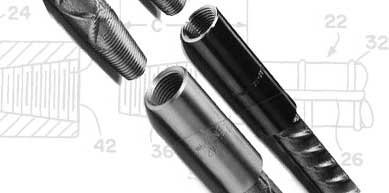
A standard coupler must create a connection stronger than the rebar itself; the criterion in Chapter 9 is at least ۱.۲۵ times the yield stress.
Signs of a Suspicious Coupler
| Sign | What it indicates | Action |
|---|
| No tensile test certificate | Possibility of failing to reach ۱.۲۵ times fy | Do not use in structural work without a certificate |
| Irregular or incomplete threads | Poor machining quality | Check for full thread engagement with the rebar |
| Abnormally low price | Saving on material or quality control | Examine authenticity and certification more carefully |
| Size mismatch with the rebar | The coupler is intended for another diameter | Incomplete and dangerous connection; reject it |
Why the Test Certificate Has the Final Say
Appearance and even clean threads alone do not guarantee that the coupler reaches ۱.۲۵ times the yield stress; only a tensile test can prove this. For every structural project, request the manufacturer’s tensile test certificate and make sure that the result matches the type and size of the rebar. Selling a coupler without a certificate for structural work is a risk that should not be accepted.
A few minutes spent checking the certificate and threads is the most essential step before selling or using a component on which the safety of a structure depends.

Reader comments
0 comments
No comments yet
Be the first to share your experience with this article.