
Compare steel pipe prices by size, outer diameter, thickness and bar weight, with a conversion table, sample market prices, the weight formula and buying tips.
Short answer: To understand steel pipe prices, knowing “۲ inches” or “diameter ۶۰” alone is not enough. The pipe type, outside diameter, thickness, bundle length, weight, standard, and manufacturer must all be specified together. Two pipes with the same diameter may have completely different prices due to differences in thickness or production method.
This guide is not intended to overwhelm you with complex terminology. We will simply see what actual diameter each size has, how the weight and price of a bundle are calculated, and what information you should provide when requesting a quotation.
How is the steel pipe price determined based on size and diameter?
The seller usually announces the base price per kilogram, but the final cost of one bundle is calculated by multiplying the weight of that bundle by the daily price. Therefore, when the sheet type and manufacturer remain constant, an increase in diameter or thickness means greater weight and, consequently, a higher price.
To see up-to-date rates, you can check the daily pipe price page. When comparing several sellers, make sure to also consider the update date, tax, loading location, and shipping cost on the same basis.
Sample pipe prices by size in the market
To ensure that the comparison is not merely theoretical, we have included several rows from Ahantime’s public list in the table below. These figures are samples recorded on ۱۲ شهریور ۱۴۰۵ and are not today’s prices.
| Pipe type | Size | Manufacturer | Recorded price |
|---|---|---|---|
| Scaffolding | ۱½ inch | Sepahan | ۱۱۷٬۰۹۱ toman/kg |
| Well casing | ۸ inch | Tehran Shargh | ۱۱۹٬۰۴۳ toman/kg |
| Well casing | ۱۰ inch | Tehran Shargh | ۱۱۹٬۱۰۰ toman/kg |
| Well casing | ۱۲ inch | Tehran Shargh | ۱۱۹٬۰۷۸ toman/kg |
| Spiral, thickness ۶ | ۱۶ inch | Neyzar | ۱۲۷٬۲۷۳ toman/kg |
| Galvanized | ۶ inch | Kalup | ۲۰۶٬۲۸۳ toman/kg |
This table clarifies an important point: size alone does not determine the price per kilogram; the production type, coating, and manufacturer also have an effect. For a transaction, check the same-day inventory and price in the live pipe price table, and calculate the final bundle amount using its actual weight.
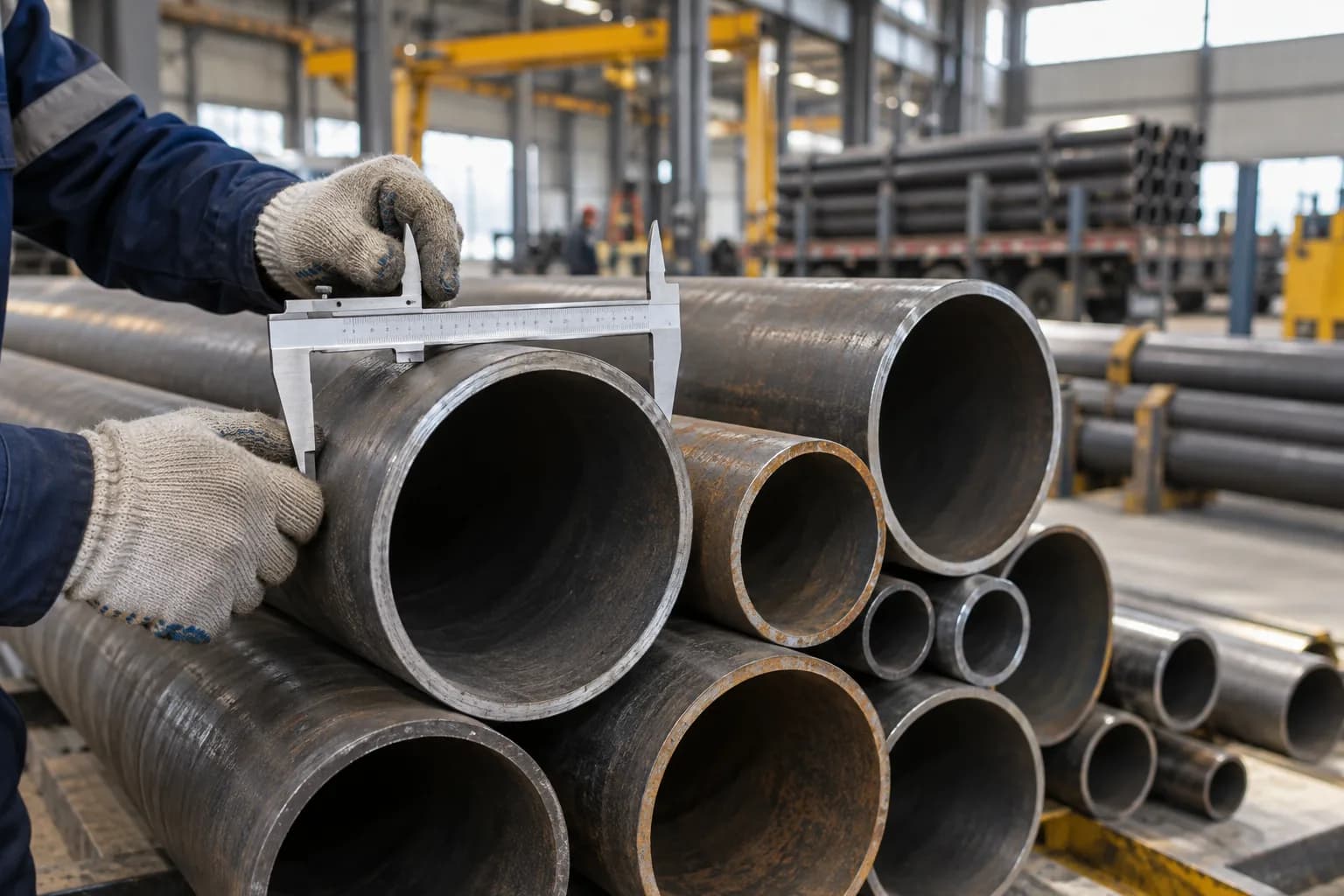
Visual comparison of pipe diameters and thicknesses; verify the final dimensions using the technical data sheet or pro forma invoice.
Pipe size in inches to actual diameter conversion table
The nominal pipe size, or NPS, is not the same as its outside diameter. For example, a ۲-inch pipe usually has an outside diameter of ۶۰.۳ millimeters, not ۵۰.۸ millimeters. The table below shows common market conversions:
| Nominal size | DN | Approximate outside diameter |
|---|---|---|
| ½ inch | DN15 | ۲۱.۳ millimeters |
| ¾ inch | DN20 | ۲۶.۷ millimeters |
| ۱ inch | DN25 | ۳۳.۴ millimeters |
| ۱¼ inch | DN32 | ۴۲.۲ millimeters |
| ۱½ inch | DN40 | ۴۸.۳ millimeters |
| ۲ inch | DN50 | ۶۰.۳ millimeters |
| ۲½ inch | DN65 | ۷۳ millimeters |
| ۳ inch | DN80 | ۸۸.۹ millimeters |
| ۴ inch | DN100 | ۱۱۴.۳ millimeters |
| ۵ inch | DN125 | ۱۴۱.۳ millimeters |
| ۶ inch | DN150 | ۱۶۸.۳ millimeters |
| ۸ inch | DN200 | ۲۱۹.۱ millimeters |
| ۱۰ inch | DN250 | ۲۷۳ millimeters |
| ۱۲ inch | DN300 | ۳۲۳.۹ millimeters |
Note: These figures relate to common standard dimensions. Before finalizing the purchase, use the specifications stated in the pro forma invoice or the manufacturer’s technical data sheet as the basis.
Which type of pipe is suitable for your application?
Choosing the right pipe type is the first step in comparing steel pipe prices. A summary of common market applications is provided in this table:
| Pipe type | Important purchasing specification | Common application |
|---|---|---|
| Industrial welded pipe | Diameter, thickness, and weight | Structures and general-purpose lines |
| Scaffolding pipe | Thickness and weight of a ۶-meter bundle | Scaffolding; not suitable for fluid transfer |
| Galvanized pipe | Coating type and thickness | Water supply and damp environments |
| Seamless pipe | Schedule, standard, and testing | High-pressure installations |
| API pipe | Grade and technical testing | Oil, gas, and transmission lines |
| Spiral pipe | Diameter, thickness, and weld type | Large-diameter transmission lines |
| Furniture pipe | Dimensional accuracy and surface quality | Furniture and lightweight components |
If your application involves high pressure or temperature, the cheapest option is not necessarily the safest choice. In such cases, the standard, test certificate, and project designer’s opinion take precedence over price.
Formula for calculating the weight and price of one pipe bundle
To calculate the steel pipe price, first calculate the approximate weight per meter using this formula:
Weight per meter (kilograms) ≈ ۰.۰۲۴۶۶ × thickness × (outside diameter − thickness)
The diameter and thickness must be expressed in millimeters. The bundle weight equals the weight per meter multiplied by the bundle length; the bundle price is then obtained by multiplying the weight by the daily rate per kilogram.
Example: A ۲-inch pipe with an outside diameter of ۶۰.۳, a thickness of ۳ millimeters, and a length of ۶ meters weighs approximately ۲۵.۴۳ kilograms. If the assumed rate per kilogram is ۱۲۳ thousand tomans, the raw price of the bundle will be approximately ۳ million and ۱۲۸ thousand tomans. This figure is only a calculation example and is not the current market price.
What is the difference between diameter, thickness, and Schedule?
Outside diameter (OD) is the external measurement of the pipe and usually remains constant for a given nominal size. Inside diameter (ID) decreases as thickness increases. NPS or DN is the nominal size designation, not necessarily the measurement you see with a ruler.
Schedule is also a method of specifying thickness in standard pipes. For example, two ۲-inch Schedule ۴۰ and Schedule ۸۰ pipes have the same outside diameter, but Schedule ۸۰ is thicker, heavier, and more expensive.
How do prices behave for commonly used sizes?
۱- to ۲-inch pipes are widely used in installations and light-duty work, and their availability is usually better. ۳- and ۴-inch sizes are commonly used in boiler rooms, industry, and structures. For diameters of ۶ inches and above, bundle weight, loading capability, and shipping costs account for a more significant share of the final amount.
For large projects, do not compare steel pipe prices only by bundle; weighbridge weight, production tolerance, and the number of bundles in each bundle package can reveal the actual difference between two offers.
Is pricing by kilogram better or by bundle?
Both methods are valid, provided that the actual weight is specified. Bundle pricing is easier to understand for quick purchases; kilogram pricing also makes it easier to compare products with different weights. A professional quotation should show at least the size, thickness, length, bundle weight, manufacturer, unit rate, and total amount.
If the seller gives only one final figure, ask for the bundle weight. A cheaper bundle may be lighter than the nominal weight and ultimately may not be an economical purchase.
What factors change steel pipe prices?
- The price of the sheet or billet used in production
- Exchange rates, manufacturer supply, and market demand
- Production type: welded, seamless, galvanized, or spiral
- Size, thickness, actual weight, and manufacturer’s brand
- Standard, technical tests, and quality-control certificate
- Tax, cutting, packaging, loading, and shipping costs
To understand the market’s general direction, you can also review the steel market analysis section, but make your purchasing decision based on the same-day pro forma invoice.
What information should we provide for an accurate quotation?
A good quotation request is short and unambiguous. Send the following items to the seller together:
- Pipe type and application; for example, industrial pipe for structures
- Nominal size or outside diameter
- Thickness or Schedule
- Bundle length and required quantity
- Standard, grade, or preferred manufacturer
- City and unloading location
- Need for cutting, testing, or certification
- Request that tax and shipping be stated separately
Sample message: “۲۰ bundles of ۲-inch industrial pipe, thickness ۳ millimeters, length ۶ meters, delivered to Tehran; please state the weight of each bundle, manufacturer, tax, and shipping cost separately.”
Sources and preparation method for this guide
The nominal dimensions and outside diameters in the table have been matched against the framework of the ASME B36.10 standard. For transmission-line pipes, manufacturing, testing, and traceability specifications must also be checked according to the project standard, including API Specification 5L. The sample price data was extracted from Ahantime’s public list; the tradable price is determined only by checking inventory, weight, tax, and delivery location on the same day.
Content review date: ۱۹ شهریور ۱۴۰۵
Common mistakes when purchasing
- Equating the inch size with the actual diameter
- Comparing two prices without checking thickness and weight
- Buying scaffolding pipe for water or gas transmission
- Ignoring standards and testing in sensitive projects
- Failing to calculate tax and shipping to the project site
- Relying on an old price or a price without a validity period
Conclusion
For a proper comparison of steel pipe prices, first specify the application; then consider the nominal size, outside diameter, thickness, length, and weight together. For ordinary purchases, the actual bundle weight is the best bridge between kilogram-based and bundle-based pricing. In sensitive projects, standards and technical documents must be reviewed before price.
Frequently Asked Questions
سایز اسمی لوله با قطر خارجی چه تفاوتی دارد؟
سایز اسمی یا NPS نام استاندارد لوله است و همیشه با قطر خارجی واقعی برابر نیست؛ مثلاً قطر خارجی لوله ۲ اینچ حدود ۶۰٫۳ میلیمتر است.
قیمت لوله فولادی بر اساس سایز چگونه محاسبه میشود؟
وزن شاخه از قطر خارجی، ضخامت و طول به دست میآید. سپس وزن واقعی در نرخ روز هر کیلو ضرب و مالیات، حمل و خدمات جداگانه اضافه میشود.
قطر خارجی لوله ۴ اینچ چند میلیمتر است؟
در جدول رایج لوله فولادی، قطر خارجی لوله ۴ اینچ حدود ۱۱۴٫۳ میلیمتر است؛ استاندارد و مشخصات کارخانه باید پیش از خرید کنترل شود.
آیا افزایش سایز همیشه قیمت هر کیلو را بالا میبرد؟
خیر. سایز بزرگتر معمولاً قیمت هر شاخه را بهدلیل وزن بیشتر بالا میبرد، اما نرخ هر کیلو به نوع، ضخامت، استاندارد، کارخانه و بازار بستگی دارد.
برای استعلام قیمت لوله چه مشخصاتی لازم است؟
نوع لوله، سایز اسمی، قطر خارجی، ضخامت یا رده، طول و تعداد شاخه، استاندارد، کارخانه، شهر تحویل و وضعیت مالیات و حمل را اعلام کنید.
لوله درزدار و مانیسمان چه تفاوتی دارند؟
لوله درزدار از ورق و با خط جوش ساخته میشود؛ لوله مانیسمان بدون درز جوش است. انتخاب بین آنها باید بر اساس فشار، دما، استاندارد و نقشه پروژه انجام شود.
Schedule 40 یعنی ضخامت ۴۰ میلیمتر؟
خیر. Schedule یک رده ابعادی است و ضخامت واقعی آن با تغییر سایز لوله فرق میکند؛ مقدار میلیمتری باید از جدول همان NPS خوانده شود.
وزن لوله فولادی چگونه محاسبه میشود؟
وزن تقریبی هر متر برابر است با ۰٫۰۲۴۶۶ ضربدر ضخامت و ضربدر «قطر خارجی منهای ضخامت»؛ همه ابعاد باید بر حسب میلیمتر باشند.
قیمت اعلامشده شامل مالیات و حمل است؟
همیشه نه. در استعلام مشخص کنید قیمت با یا بدون مالیات است و هزینه بارگیری، بیمه، کرایه و تخلیه را جداگانه بخواهید.
برای فشار بالا لوله درزدار بخریم یا مانیسمان؟
انتخاب باید طبق نقشه و استاندارد پروژه انجام شود. در بسیاری از سرویسهای پرفشار از مانیسمان استفاده میشود، اما رده، گرید و مدارک فنی تعیینکنندهاند.
شاخه ۶ متری و ۱۲ متری را چگونه مقایسه کنیم؟
هر دو پیشنهاد را بر اساس وزن واقعی یا قیمت هر کیلو هممبنا کنید و هزینه حمل، برش و پرت پروژه را نیز در نظر بگیرید.
قیمت لوله هر چند وقت تغییر میکند؟
به موجودی، نرخ مواد اولیه، ارز و شرایط عرضه بستگی دارد و ممکن است در طول روز تغییر کند؛ برای معامله فقط پیشفاکتور دارای زمان اعتبار را ملاک بگیرید.
Reader comments
Be the first to share your experience with this article.