
A guide to choosing and buying steel pipe by application, fluid, pressure, temperature, diameter, wall thickness, production method, and standard — with a comparison table, weight formula, chart, and FAQ.
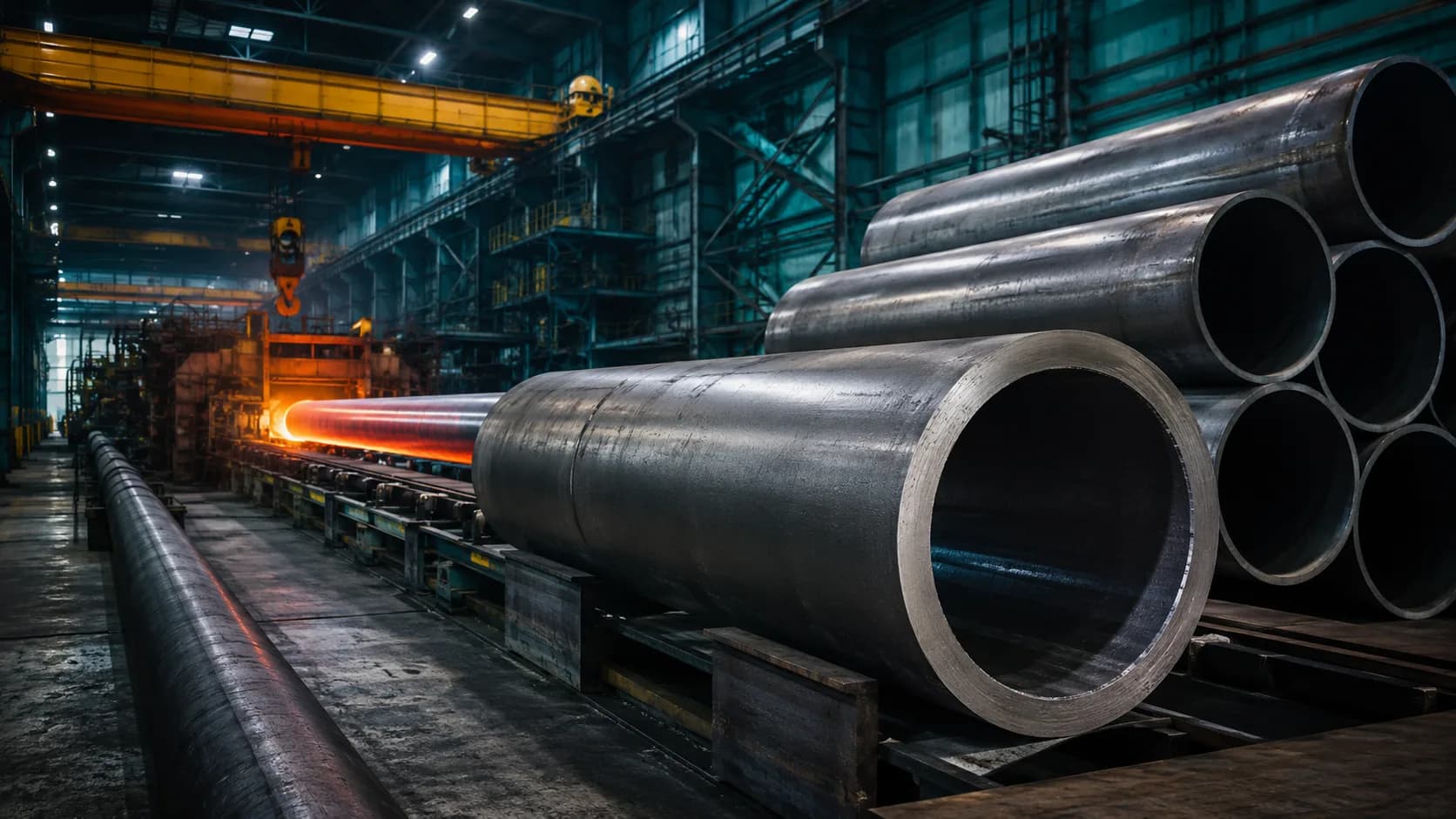
Short answer: A steel pipe is a hollow steel section used to convey fluids or construct structural components. Choosing the right one depends on the application, fluid type, design pressure and temperature, diameter, thickness, production method, grade, standard, coating, and delivery documents; therefore, “pipe diameter” alone is not sufficient for purchasing.
What Is a Steel Pipe?
A steel pipe is manufactured from steel plate or billet and may be welded or seamless. In a professional order, the technical specifications must be matched to the project requirements. A pipe selected for scaffolding or chassis fabrication is not necessarily suitable for gas, steam, or corrosive-fluid lines.
Where Are Steel Pipes Used?
- Conveying water, gas, steam, and industrial fluids
- Process lines, mechanical installations, and transmission networks
- Fabricating structures, chassis, railings, and industrial equipment
- Scaffolding and general applications without pressure and temperature requirements
In pressure applications, the design pressure and temperature, fluid type, corrosion, connection method, and delivery tests must be specified before selection.
What Is the Difference Between Welded and Seamless Pipes?
| Feature | Welded | Seamless | Buying tip |
|---|---|---|---|
| Production method | Forming plate and joining the edges by welding | Production without a longitudinal seam | State the production method together with the standard and grade. |
| Quality control | The quality of the plate, weld, and seam testing is important. | The grade, thickness, testing, and product certificate are important. | Being seamless alone does not guarantee pressure resistance. |
| Application | From structures and installations to some transmission lines | Some higher-temperature or higher-pressure services, only according to the design | Leave the final selection to the standard and design. |
Types of Steel Pipes by Application
Gas and Water Pipes
For these pipes, check the fluid type, working pressure, connection method, coating, and project-required approvals. A trade name or market designation alone cannot replace technical specifications.
Industrial and Process Pipes
The design temperature, pressure, steel grade, corrosion, and required tests, such as non-destructive tests, must be included in the purchase request.
Scaffolding and Structural Pipes
Diameter, actual thickness, surface condition, straightness, and required capacity are decisive. Do not assume these pipes are equivalent to pipes suitable for pressure lines.
Stainless Steel Pipes
For stainless steel pipes, the alloy grade, thickness, surface treatment, and compatibility with the fluid are important and must be evaluated separately from carbon steel pipes.
Important Steel Pipe Standards
ASTM A53/A53M: Covers the specifications for black or hot-dip galvanized, welded or seamless steel pipe within a specified range of sizes and is used for mechanical applications and some water, gas, and air lines. The standard edition and order requirements must be specified in the project documents.
ASTM A106/A106M: Specifies seamless carbon steel pipe for high-temperature service. This designation should not automatically be considered equivalent to “any seamless pipe”; the grade, thickness, and delivery testing must be checked.
ASME B36.10M and B36.19M: These tables are used for the dimensions and nominal thicknesses of steel and stainless steel pipes. A dimensional table alone does not establish the grade or a pipe’s suitability for pressure.
API Spec 5L: Establishes material, manufacturing, inspection, testing, marking, and traceability requirements for line pipe in the oil, gas, and energy industries. API 5L is not a general standard for all pipes.
What Is Pipe Schedule or Class?
Schedule is a method of designating wall thickness in standard systems. For a given NPS, increasing the schedule generally increases the thickness and decreases the internal diameter; the exact value must be read from the table for the same size and standard edition. The expression “۲-inch pipe” or “Schedule 40” alone is not a complete order.
What Information Should Be Included for an Accurate Inquiry?
| Specification | What to write in the inquiry | Why it matters | Example |
|---|---|---|---|
| Application and fluid | Water, gas, steam, or industrial fluid | The grade, coating, and testing depend on the application. | Process water |
| Pressure and temperature | Design and operating pressure and temperature | Required for selecting the thickness and schedule. | ۱۰ bar and ۱۲۰ °C according to the design |
| Dimensions | NPS or DN, outside diameter, and thickness | Determines the weight, internal diameter, and connection compatibility. | NPS 2, OD 60.3, t 3.91 mm |
| Production method and grade | Welded or seamless, grade, and standard | Clarifies the product standard and delivery testing. | According to the order standard |
| Delivery and documents | Length, coating, certificate, quantity, and delivery location | Makes it possible to match the shipment and final price. | ۶-meter length + mill certificate |
How Is the Weight of a Steel Pipe Calculated?
For an initial estimate, the theoretical weight per meter is obtained from the following formula:
Approximate weight (kg/m) = ۰٫۰۲۴۶۶ × t × (OD − t)
In this formula, OD is the outside diameter and t is the thickness, both in millimeters. For an OD of ۶۰٫۳ and a thickness of ۳٫۹۱ millimeters, the theoretical weight is approximately ۵٫۴۴
kilograms per meter. This figure is an estimate; check the standard weight table, tolerance, coating, and actual scale weight upon delivery.
How Do You Choose the Right Pipe?
- Specify the application, fluid, design pressure, and temperature.
- State the NPS or DN, outside diameter, thickness or Schedule, and length.
- Determine whether the pipe is welded or seamless, as well as its grade and product standard.
- Include the coating, connection type, testing, mill certificate, and quantity in the inquiry.
- Compare the price and delivery time using identical specifications; comparing two pipes with different grades or thicknesses is not valid.
To view the current pipe price and estimate the weight, use the pipe weight calculator.
Steel Pipe Buying Checklist
- The application and fluid have been specified.
- The design pressure and temperature have been recorded.
- The diameter, thickness or Schedule, and exact length are clear.
- The production method, grade, and standard have been stated.
- The coating, connection type, testing, and delivery certificate have been determined.
- The quantity, delivery location, price unit, and delivery time are clear.
Common Mistakes When Buying
- Selecting solely based on nominal diameter or the name “Mannesmann”
- Comparing prices without standardizing the grade, thickness, and standard
- Ignoring corrosion, coating, and connection type
- Accepting the theoretical weight as the shipment’s definite weight
Conclusion
The right steel pipe is a product whose specifications are compatible with the project’s application and design. For an accurate inquiry, state the application and fluid, pressure and temperature, dimensions, production method, grade, standard, coating, testing, and delivery documents together. If you are undecided between two options, send the technical specifications for review and price quotation.
Frequently Asked Questions
لوله درزدار بهتر است یا بدوندرز؟
هیچکدام مطلقاً بهتر نیستند؛ فشار، دما، سیال، ابعاد، استاندارد پروژه، روش اتصال و گواهی محصول تعیینکنندهاند.
آیا لوله مانیسمان همیشه برای فشار بالا مناسب است؟
خیر. بدوندرز بودن فقط یکی از ویژگیهای تولید است و گرید، ضخامت، Schedule، آزمون و استاندارد باید برای سرویس موردنظر مناسب باشند.
تفاوت لوله و تیوب چیست؟
Pipe معمولاً بر اساس اندازه اسمی و کاربرد لولهکشی نامگذاری میشود، درحالیکه Tube اغلب بر اساس قطر خارجی دقیق و ضخامت تعریف میشود؛ استاندارد پروژه ملاک نهایی است.
برای خرید لوله چه اطلاعاتی لازم است؟
کاربرد، سیال، فشار، دما، قطر، ضخامت، طول، روش تولید، استاندارد، گرید، پوشش، مقدار و محل تحویل را اعلام کنید.
قیمت لوله چگونه تعیین میشود؟
جنس، گرید، قطر، ضخامت، درزدار یا بدوندرز بودن، کارخانه، پوشش، مقدار، زمان و محل تحویل و شرایط روز بازار بر قیمت اثر میگذارند.
Reader comments
Be the first to share your experience with this article.