
Is Iranian steel pipe better than imported? A real comparison of quality, mills, documents and cost using Ahantime market data, with a selection table and a buying checklist.
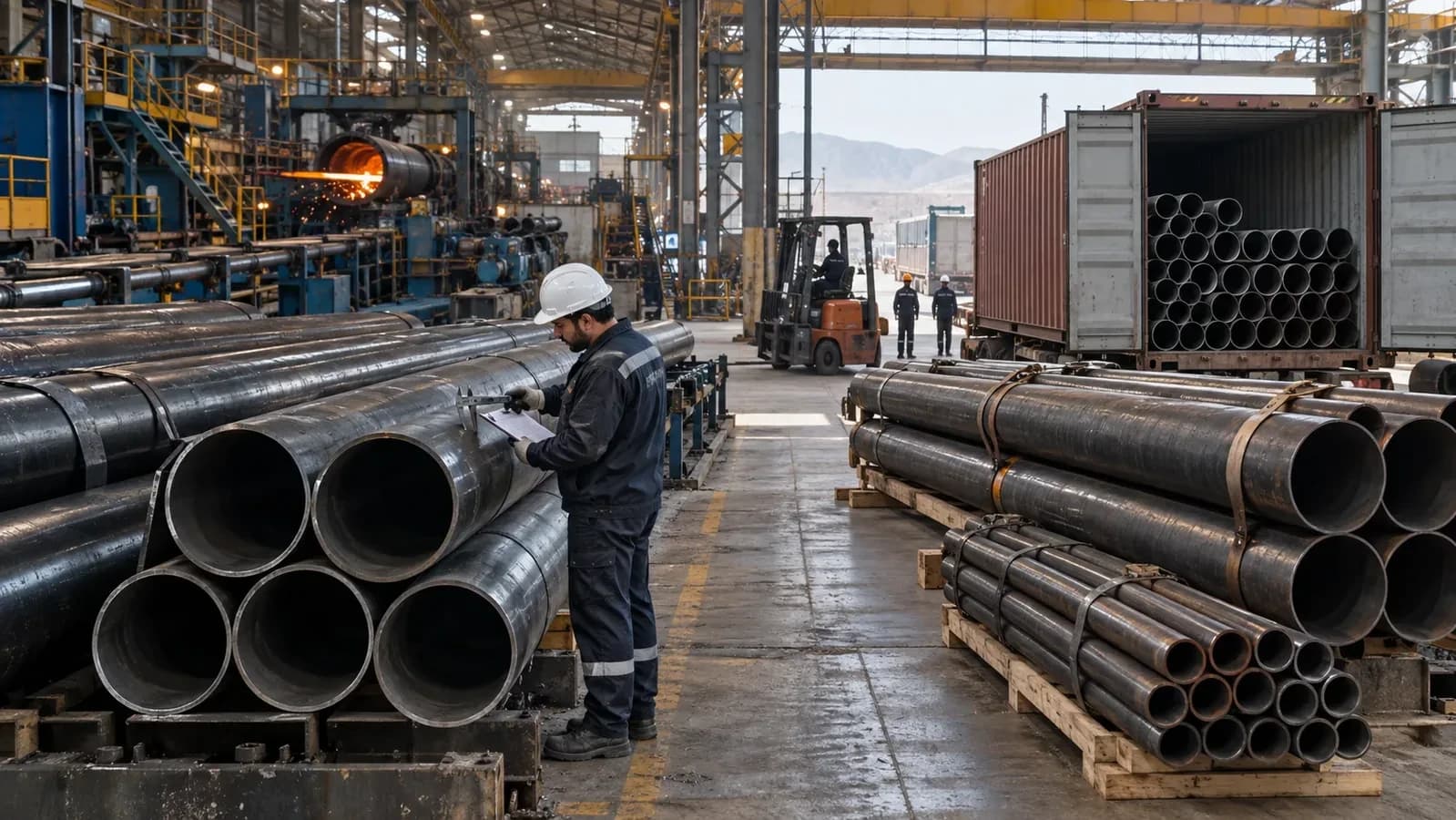
To choose between Iranian and imported steel pipe, the country name is not enough. In common purchases, standard domestic products are usually supplied faster; however, for heavy schedules, large diameters, or special grades, imported products may be a better choice. The main criterion is the technical conformity and documentation of the same shipment.
The country of manufacture alone is not an indication of quality. The standard, grade, thickness, heat number, material certificate, and project approval are what distinguish a reliable purchase from a high-risk offer.
Real data from the Ahantime market
In Ahantime’s recorded data on ۱۲ شهریور ۱۴۰۵, ۱۶-inch spiral pipe with a thickness of ۶ millimeters from Neyzar was recorded at ۱۲۷٬۲۷۳ tomans and a Kalup sample at ۱۱۹٬۰۹۱ tomans per kilogram. This example shows the comparison method; the current purchase price must be requested again.
For a hypothetical order of ۵ tons, the difference between these two rates would be approximately ۴۰٬۹۱۰٬۰۰۰ tomans; however, this is not yet the final cost. Tax, freight, coating, inspection, waste, and payment terms must be added separately.
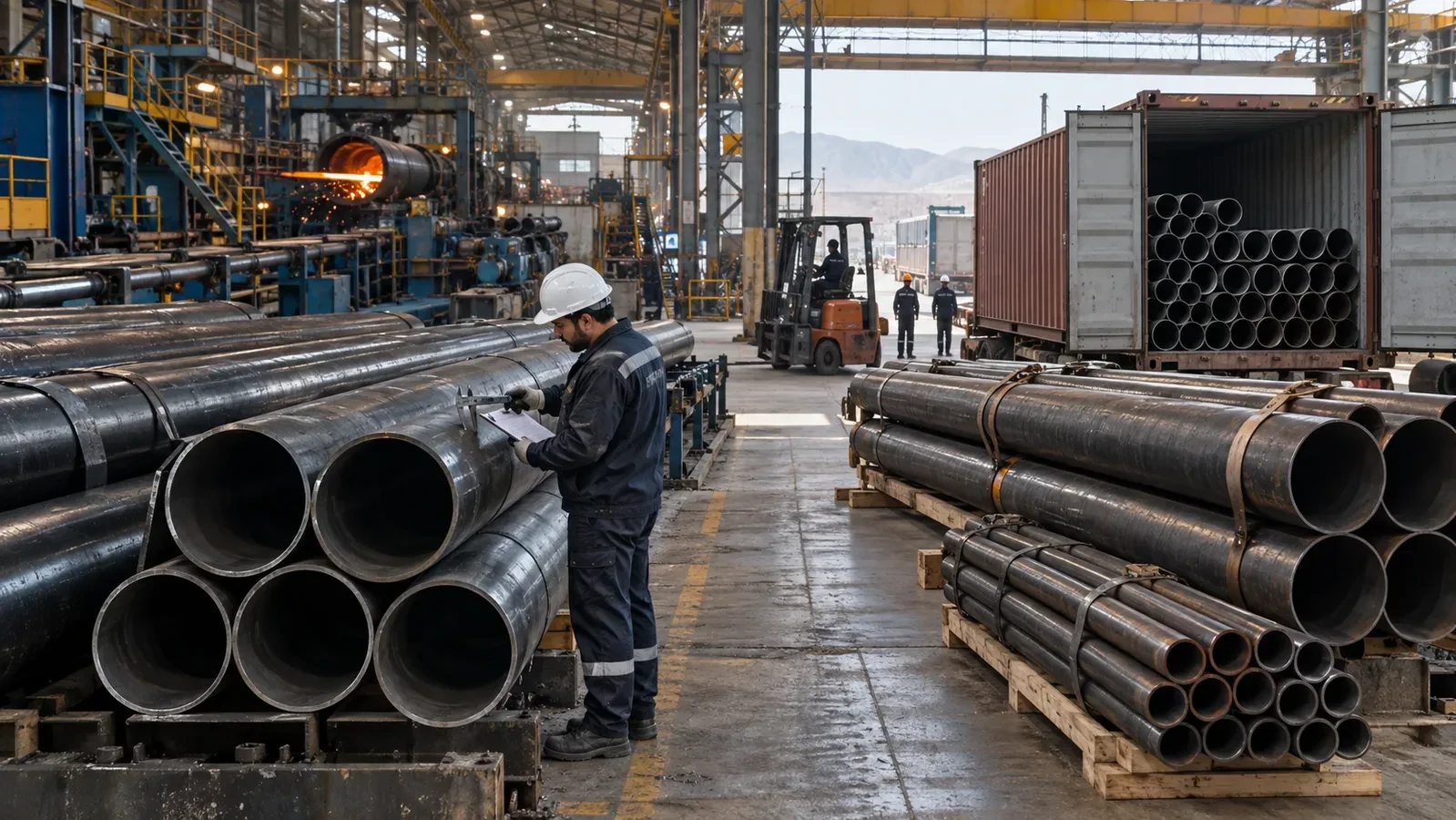
Domestic and imported pipe should be compared based on the grade, thickness, and documentation of the same shipment.
Quick comparison of Iranian or imported steel pipe for comparing Iranian or imported steel pipe:
| Pipe type | Domestic sample | When to choose imported? | Main purchasing criterion |
|---|---|---|---|
| Seamless | Kaveh Iranian, National Group | Specific schedule or brand | Schedule, grade, and MTC |
| Industrial | Sepanta, Saveh, Esfahan | Specific dimensions or tolerance | Diameter, thickness, and weight |
| Gas | Sepanta, Esfahan, Saveh | Only with supervisor approval | Aboveground or underground standard |
| API | Ahvaz Pipe Mill, Saveh | Project-approved manufacturer | Grade, PSL, and testing |
| Spiral | Neyzar, Kalup | Custom diameter or coating | Diameter, coating, and testing |
| Alloy and stainless | Limited or customized production | Specific project grade | ASTM, grade, and authenticity |
Types of steel pipe in the Iranian market; which one should we choose?
Seamless pipe
Seamless pipe is considered for steam, oil, and process lines. Among domestic products, Kaveh Iranian and National Group are well known; for imported goods, the exact factory name is more important than the country of origin. Match the schedule, grade, and heat number with the drawing.
Black industrial and construction pipe
Industrial pipe is used for structures, chassis, and general lines. Sepanta, Saveh, and Esfahan are common domestic names. Compare two offers based on the diameter, actual thickness, and branch weight; the market description alone is not enough.
Aboveground and underground gas pipe
When purchasing gas pipe, whether it is aboveground or underground, the body standard and supervisor approval are more important than whether the product is domestic or imported. Sepanta, Esfahan, and Saveh are well-known market names; similar dimensions alone do not mean that the pipe is permitted for gas service.
API and oil line pipe
API line pipe is used to transfer oil, gas, and fluids. The grade, PSL, weld type, testing, and coating must be precisely coordinated with the project datasheet. Ahvaz Pipe Mill and Saveh are domestic examples in this market.
Galvanized pipe
Zinc coating increases the pipe’s resistance to environmental corrosion and makes it suitable for some water lines, greenhouses, fences, and damp environments. When comparing two brands, do not use a shiny appearance as the only criterion; base thickness, coating weight, surface uniformity, thread quality, and production standard are important. The current galvanized pipe price page is available for comparing size and factory. Spiral and large-diameter pipe:
Spiral pipe is used in water lines and large diameters. Neyzar and Kalup are domestic market names. Compare the diameter, thickness, coating, hydrostatic test, and delivery time.
Alloy, boiler, and stainless steel pipe
For high temperatures or corrosive environments, the grade and authenticity of the documentation are decisive. A335 is used for alloy pipe, A312 for stainless pipe, and A179 is usually relevant to heat-exchanger tubes; do not substitute Pipe and Tube for each other.
##
How should we compare the domestic factory and imported goods?
In the domestic market, Kaveh Iranian is known for seamless pipe, Sepanta and Esfahan for industrial and gas pipes, and Ahvaz Pipe Mill for line pipe. However, the factory name does not replace the certificate for the same shipment and the project’s approved-manufacturer list. In comparing Iranian or imported steel pipe, “Chinese” or “European” is not a brand name. The factory name, Heat Number, MTC, and body marking must correspond with one another; otherwise, the country of manufacture is not a reliable criterion. Application: specify structure, gas, steam, water, or process line.
Dimensions: write the NPS or DN, outside diameter, thickness or Schedule, and length.
Documentation: match the standard, grade, manufacturer name, Heat Number, and MTC.
Project approval: for oil, gas, and petrochemical projects, the manufacturer must be approved by the client.
Final cost: consider the product price, tax, freight, inspection, and delivery time together.
Inquiry example: “۵۰ lengths of ۲-inch seamless pipe, Schedule ۴۰, ASTM A106 Gr B, ۶-meter length, delivery to Tehran; please state the full factory name, country of manufacture, branch weight, MTC, availability, tax, and freight separately.”
Signs of a high-risk offer
- A very low price without stating the factory and complete specifications
- Phrases such as “first grade” without a standard and grade
- Illegible marking or a mismatch between the body heat number and the MTC
- Unusual weight and no possibility of inspection or weighing
- Insistence on payment before providing documents and confirming availability
Conclusion: choosing Iranian steel pipe or importingIn choosing between Iranian and imported steel pipe, standard domestic products are usually supplied faster for common applications; however, imported products should also be considered for large diameters, heavy schedules, or special grades. The final decision must be based on technical specifications, documentation, and delivered cost.
This guide was prepared using Ahantime market data and official API 5L and ASME B36.10 sources. The sample price is only intended to teach the comparison method; check availability and the rate again on the order date.
Content prepared by: Ahantime. The technical manager or supervisor of the same project must approve the final decision, especially for gas, steam, process lines, and oil and gas projects. Last content review: ۲۲ شهریور ۱۴۰۵.
Frequently Asked Questions
لوله فولادی ایرانی بهتر است یا وارداتی؟
برتری مطلق وجود ندارد. برای سایزهای رایج، محصول داخلی معتبر معمولاً سریعتر تأمین میشود؛ برای قطر، رده یا آلیاژ خاص ممکن است وارداتی مناسبتر باشد. استاندارد، گرید، مدارک و تأیید پروژه را ملاک بگیرید.
مهمترین کارخانههای لوله فولادی ایران کداماند؟
بسته به نوع محصول، نامهایی مانند لولههای دقیق کاوه ایرانیان، سپنتا، سپاهان، نورد و پروفیل ساوه و لولهسازی اهواز در بازار شناخته میشوند. دامنه تولید و تأیید همان محصول را روز خرید بررسی کنید.
لوله مانیسمان ایرانی برای چه کاربردی مناسب است؟
برای خطوط فرایندی، بخار، روغن و سرویسهایی که طراحی پروژه لوله بدون درز میخواهد بررسی میشود. سایز، رده، گرید، استاندارد و مدارک همان محموله باید با نقشه پروژه منطبق باشد.
آیا لوله فولادی چینی بیکیفیت است؟
نه لزوماً. چین کارخانههای متعدد با سطح کیفیت متفاوت دارد. نام دقیق سازنده، شماره ذوب، گواهی متریال، آزمونها و انطباق ابعادی را بررسی کنید؛ کشور سازنده بهتنهایی معیار کیفیت نیست.
برای خرید لوله گاز چه چیزی را کنترل کنیم؟
روکار یا توکار بودن، استاندارد درجشده، علامت کارخانه و تأیید ناظر یا شرکت گاز منطقه را کنترل کنید. لولهای که فقط ابعاد مشابه دارد الزاماً برای گاز مجاز نیست.
تفاوت لوله صنعتی با لوله API چیست؟
لوله صنعتی معمولاً در سازه، شاسی و خطوط عمومی کاربرد دارد؛ لوله API برای خط انتقال و طبق الزامات API 5L انتخاب میشود. این دو عنوان را بدون بررسی استاندارد، گرید و آزمون جایگزین هم نکنید.
چطور اصالت لوله وارداتی را بررسی کنیم؟
نوشته بدنه را با نام کارخانه، Heat Number و MTC تطبیق دهید. برای سرویس حساس، بازرسی شخص ثالث و فهرست سازندگان مورد تأیید پروژه را هم بررسی کنید.
قیمت لوله ایرانی و وارداتی را چگونه مقایسه کنیم؟
دو کالای هممشخصات را مقایسه کنید و مبلغ کالا، مالیات، کرایه، بازرسی، زمان تحویل و ریسک تأمین مجدد را کنار هم بگذارید. قیمت واحد بهتنهایی تصمیم دقیقی نمیدهد.
هنگام استعلام لوله فولادی چه مشخصاتی لازم است؟
کاربرد، سایز یا NPS، قطر خارجی، ضخامت یا رده، استاندارد و گرید، طول و تعداد، کارخانه، کشور سازنده، مدارک، محل تحویل، مالیات و کرایه را بنویسید.
MTC و Heat Number چه کاربردی دارند؟
MTC نتایج شیمیایی، مکانیکی و اطلاعات تولید را ثبت میکند و Heat Number محموله را به ذوب مربوط پیوند میدهد. شماره روی بدنه باید با گواهی همان کالا تطبیق داشته باشد.
Reader comments
Be the first to share your experience with this article.